
Layering for Hudson Valley Weather: A Spring Essay in Wool and Linen
The Hudson Valley in spring does not believe in weather forecasts. This is not a complaint — it is a statement of meteorological fact, earned over years of standing in parking lots staring at my weather app in disbelief while actual precipitation falls from an actual sky that was supposed to be "partly cloudy with a 10% chance of rain." The Hudson Valley in spring is a wild animal. It is a mood swing with geographical coordinates. It is the only place I have ever been where you can experience frost, sunshine, a thunderstorm, and a humidity level that makes your hair quadruple in volume, all within the same three-hour window.
I love it. I genuinely, deeply love it. But dressing for it requires a particular set of skills, a willingness to carry more layers than seems reasonable, and a philosophical acceptance that you will, at some point in the day, be simultaneously too hot and too cold in different parts of your body. This is the Hudson Valley spring experience. This is what I signed up for. This is what you sign up for too, if you're reading this, if you're planning a weekend trip upstate, if you've ever stood in the parking lot of a trailhead at 7 AM wondering why you didn't bring a heavier jacket and also why you didn't wear shorts.
This essay is about layering. But it's also about the specific joy of dressing for a place that refuses to make dressing easy. It's about the quiet satisfaction of pulling exactly the right sweater out of your bag at exactly the right moment. It's about looking like you belong to the landscape, not like you're visiting it.
The Problem, Stated Clearly
Let me describe a typical Hudson Valley spring day so we're all working from the same understanding.
You wake up at 6:30 AM in a cabin near Phoenicia, or a rented room in Hudson, or a friend's house in Kingston, or — if you're me — your own bed in Brooklyn with plans to drive up early. The temperature outside is somewhere around 38 degrees Fahrenheit. There is frost on the grass. Your breath comes out in visible puffs. You put on every layer you brought and still feel cold, which is fine, which is expected, which is why you brought so many layers in the first place.
By 10:00 AM, the sun has climbed higher and the temperature has risen to a pleasant 55 degrees. You're walking on a trail somewhere — Overlook Mountain, maybe, or the rail trail in New Paltz, or some unmarked path along the Esopus Creek that Jenna found on an app and swore was "very chill, very flat, you'll love it." You've taken off one layer, maybe two. You've tied a sweater around your waist. Life is good.
By 1:00 PM, it is 72 degrees and humid in the specific way that only river valleys can be humid. The sun is directly overhead. You're sweating through your base layer. You're carrying the sweater you tied around your waist, plus the jacket you took off an hour ago, plus the scarf you forgot you were wearing. Your arms are full of discarded clothing. You look like a pack mule with a fashion degree.
By 3:00 PM, clouds have materialized from absolutely nowhere. The temperature has dropped fifteen degrees in twenty minutes. It starts to rain — not a gentle sprinkle, not a dramatic downpour, but the particular Hudson Valley rain that falls sideways and somehow gets under every layer you're wearing. You're putting the jacket back on. You're wrestling with the sweater. You're trying to remember if you packed a raincoat or if that was something you meant to do and then forgot.
By 6:00 PM, the rain has stopped. The sky has cleared. The temperature is back up to 60 degrees, and the evening light is that particular golden shade that makes everything look like a painting. You're sitting outside at a farm-to-table restaurant in Accord, or a brewery in Gardiner, or a picnic table outside a farmers market that's technically closed but the farmers are still there packing up and they're selling you cheese anyway. You're damp but not cold. You're tired but happy. You smell like dirt and grass and the particular clean smell of Hudson Valley air. And you are wearing, once again, exactly the right combination of layers for this exact moment, because you have learned, through trial and error and several minor cases of hypothermia, how to dress for this ridiculous, glorious, unpredictable place.
This is the goal. This is the dream. This is what I'm going to teach you, to the extent that anyone can teach anyone else how to dress for a region whose weather patterns appear to be determined by dice roll.
The Philosophy: Everything Must Work Together
Before I get into specific garments and specific materials and the particular layering system that has saved my life on multiple occasions, I need to explain the philosophy that underlies all of it. Because layering for Hudson Valley spring is not just about putting on clothes and taking them off. It's about building a system. It's about thinking of your outfit not as a single entity but as a modular collection of pieces that can be added, removed, rearranged, and recombined as the day demands.
My friend Jenna, who is my most frequent hiking companion and the most competent person I know, once described her layering philosophy as "the onion, but make it fashion." I think about this phrase at least once a week. The onion — layers that can be peeled off and put back on — is the structural principle. But "make it fashion" is the aesthetic principle. The goal is not just to be comfortable. The goal is to be comfortable and look like you meant it. The goal is to walk into that farm-to-table restaurant after six hours on a trail and have the hostess look at you like you're a person who belongs there, not a person who wandered in from a survival situation.
This means every layer has to work visually with every other layer. You can't just throw a neon running jacket over a chambray shirt and call it a day — or rather, you can, but you'll look like you're in the middle of a laundry emergency. What you want instead is a palette, a limited range of colors and textures that all complement each other, so that no matter which combination of layers you're currently wearing, they look like a deliberate outfit rather than an accident of weather.
My palette, developed over years and refined through many mistakes, is this: cream, navy, olive green, and rust. These four colors work together in every possible combination. Cream sweater over navy shirt. Olive jacket over rust scarf. Navy coat over cream sweater over olive pants. Add a pair of brown leather boots (you know the ones) and a canvas bag that's faded to the exact shade of oatmeal, and you have a system that can handle any weather the Hudson Valley throws at you while still looking like you got dressed on purpose.
You may have a different palette. You may be a person who looks good in dusty pink and charcoal gray, or mustard and deep burgundy, or any other combination of colors that makes your heart sing. The specific colors don't matter. What matters is that they all work together, that there are no wildcards, that you can reach into your bag and pull out any layer and put it on and it will look like it belongs with whatever else you're already wearing.
Layer One: The Base
The base layer is the foundation of everything. It's what sits directly against your skin. It's the layer that matters most for temperature regulation, moisture management, and the prevention of the specific kind of chafing that ruins a hike by mile three. It is also the layer that most people get wrong, because most people think "base layer" means "that old cotton T-shirt I got from a 5K in 2014," and that is a mistake, and I am here to save you from it.
Cotton is the enemy. I'm sorry to be dramatic, but it's true. Cotton absorbs moisture and holds onto it, which means that when you sweat — and you will sweat, even if it's 45 degrees, because hiking uphill generates heat regardless of ambient temperature — the cotton gets wet and stays wet. Wet cotton against your skin in cool weather is not just uncomfortable. It's dangerous. It pulls heat away from your body. It can, in the wrong conditions, lead to hypothermia. I am not exaggerating. Ask anyone who has ever gone hiking in a cotton T-shirt and then gotten caught in unexpected rain. They will have a story. It will not be a happy story.
So what do you wear instead? Merino wool. I know, I know — wool sounds heavy and hot and itchy, the kind of thing you associate with scratchy Christmas sweaters and your grandmother's knitting. But merino wool is different. Merino wool is magical. Merino wool wicks moisture away from your skin, regulates your body temperature, resists odor for days longer than cotton could dream of, and feels as soft as anything in your closet. It's expensive, yes, but you need fewer base layers than you think — I own exactly three merino tops and they cover every season and situation — and they last for years if you take care of them.
My spring base layer is a merino wool long-sleeve crew neck in cream. It costs about eighty dollars new, but I found mine at a thrift store in Beacon for eleven dollars, which is a steal I will brag about for the rest of my life. It fits close to the body without being tight. It has flat seams that don't rub against my backpack straps. It's thin enough to disappear under other layers but warm enough to wear on its own when the afternoon sun finally breaks through. If I could only keep one piece of outdoor clothing for the rest of my life, it would be this shirt. I would marry this shirt. Hemingway the cat is already jealous.
If you don't do wool — allergies, preferences, ethical concerns — look for synthetic base layers made from polyester or nylon blends specifically designed for athletic use. These will also wick moisture and dry quickly. The key is to avoid cotton. Repeat after me: cotton is for picnics, not for hiking.
Layer Two: The Mid-Layer
The mid-layer is where the warmth comes from. It's the layer you'll be wearing for most of the day, the layer that provides insulation without bulk, the layer that bridges the gap between "it's cold and I need warmth" and "it's warm and I need to take something off."
My mid-layer of choice for Hudson Valley spring is a lightweight wool sweater in either navy or olive green, depending on which one I grabbed from the closet that morning. The sweater is crew-neck, because crew-neck works under any jacket and over any base layer and never looks out of place. It's thin enough to fit under a coat without restricting movement but thick enough to provide actual warmth when the temperature drops. It has, over the years, developed a small hole near the left cuff from where I caught it on a branch near Overlook Mountain, and I have mended that hole with navy thread that almost matches, and the mend is visible if you look closely, and I love it. I love visible mending. I love the evidence of a garment's history.
The sweater is not the only mid-layer option, of course. Sometimes I wear a fleece vest over the merino base layer instead — fleece has the advantage of being lighter, cheaper, and even warmer for its weight than wool. Sometimes I wear a flannel shirt, worn open over the base layer, the sleeves rolled up when the sun comes out and rolled down when the clouds roll in. The key is that the mid-layer should be something you can wear comfortably for most of the day, something that looks like real clothing and not technical gear, something that makes you feel like yourself.
This last point matters more than you might think. I have spent a lot of money on hiking-specific clothing over the years, and much of it hangs unworn in my closet because it makes me feel like I'm about to climb Everest, not walk a gentle trail in the Catskills. The best outdoor clothing, in my opinion, is the clothing that works outdoors and indoors, that transitions seamlessly from trail to town, that doesn't announce itself as athletic gear. My olive green sweater has been to four mountains and six restaurants, and it has never once looked out of place at either.
Layer Three: The Outer Layer
The outer layer is your protection against wind and rain and the particular cold that settles into your bones when the sun goes behind a cloud and stays there. It's the layer you'll take off and put back on more times than you can count. It's the layer that needs to be light enough to carry but substantial enough to actually protect you.
For Hudson Valley spring, I've settled on a waxed cotton jacket in olive green — are you sensing a theme? — that I found at an estate sale two years ago and paid seventeen dollars for. It's a Barbour, which means it's British and expensive and designed for exactly this kind of damp, unpredictable climate. The waxed cotton sheds light rain without being as heavy or as unbreathable as actual rain gear. It's lined with a thin layer of cotton that provides just enough insulation for spring temperatures. It has pockets deep enough to hold my phone and my keys and an entire granola bar. It has a corduroy collar that's soft against my neck. It weighs approximately nothing when I stuff it into my bag.
When it's colder — that early morning frost situation — I swap the waxed cotton for a heavier wool coat. My mother's navy wool coat, the one I wrote about in another essay, the one that's older than I am and warmer than any technical jacket I've ever tried. I wear it on the drive up, in the freezing pre-dawn darkness, and then I leave it in the car when the day warms up and retrieve it when the sun goes down. Two coats in one day. That's Hudson Valley spring for you.
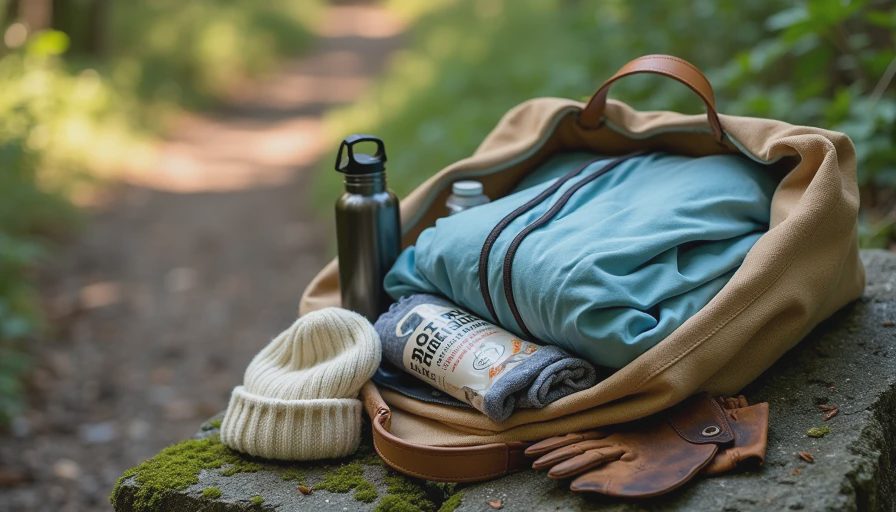
One note about rain gear, because rain in the Hudson Valley is inevitable and you need to be prepared: I keep an ultralight rain shell folded in the bottom of my bag at all times. It's made of some space-age material that weighs four ounces and stuffs into a pouch the size of a grapefruit. It's not fashionable. It's a very unflattering shade of light blue that matches none of my palette. But it keeps me dry when the sideways rain starts, and I care about that more than I care about looking good, which is a sentence I never thought I'd write but here we are. Growth. Maturity. An ultralight rain shell in an ugly shade of blue.
Layer Four: The Accessories
Accessories are not optional. I need you to understand this. In Hudson Valley spring, the difference between a pleasant hike and a miserable one is often a single piece of fabric wrapped around your neck or covering your ears. Accessories are small and light and easy to stuff in a pocket, and they punch far above their weight class in terms of warmth and comfort.
The scarf. I carry a lightweight wool scarf in a muted rust color that coordinates with both my navy sweater and my olive jacket. The scarf serves approximately seventeen functions. It keeps my neck warm when the wind picks up. It can be draped over my head as an emergency sunshade. It can be soaked in cold creek water and wrapped around my wrists to cool me down in unexpected heat. It can be spread on the ground as an impromptu picnic blanket. It can be used to carry foraged mushrooms or wildflowers or the single perfect skipping stone I found in the Esopus Creek and absolutely had to bring home. A scarf is not just a scarf. A scarf is a tool kit.
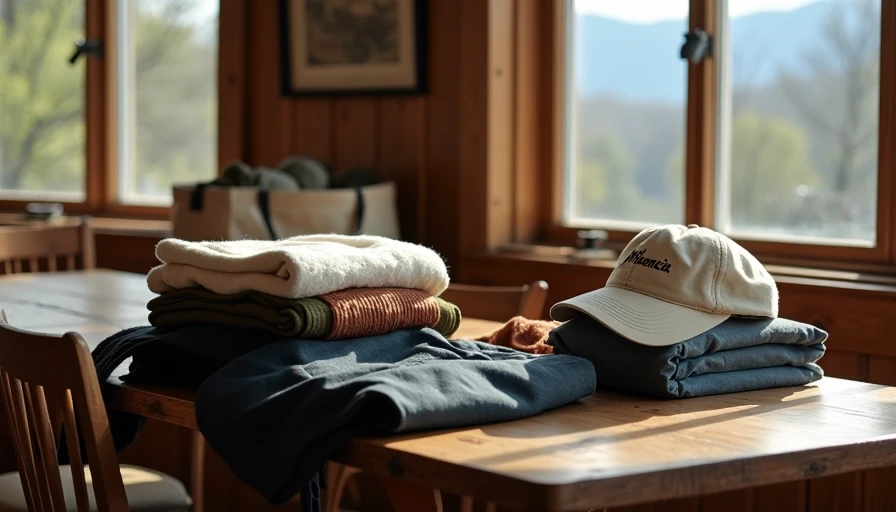
The hat. I keep two options in my bag, because I am a person who has learned from experience. Option one: a merino wool beanie in cream, for cold mornings and windy ridgelines. Option two: a canvas baseball cap that says "Phoenicia" on it and cost seven dollars at a general store, for sunny afternoons and light rain and looking like I know where I'm going even when I don't.
The socks. I don't usually write about socks, because socks are not glamorous and this is technically a fashion blog. But socks matter. Socks matter so much. I wear merino wool hiking socks that come up to mid-calf and have extra cushioning in the heel and toe. They keep my feet dry and blister-free for miles of walking. They don't smell, even after a full day of sweating in leather boots. They cost twenty-two dollars a pair and I have exactly four pairs and they are worth every single penny. If you take nothing else from this essay, take this: buy good socks. Your feet will thank you. Your hiking companions will thank you, because a person with blisters is not a fun person to hike with.
The Bag Situation
I used to think I could get away without a bag. I used to shove my extra layers into my pockets and call it good enough. This was a mistake. This was the mistake of a person who had not yet learned that Hudson Valley spring requires a wardrobe department and a logistical support team.
Now I carry a canvas tote bag from a bookstore in Hudson that has faded over the years to the exact shade of cream that matches everything in my palette. It holds my rain shell, my extra scarf, my beanie, my water bottle, my snacks, my sunscreen, my phone charger, and whatever layers I'm currently not wearing. It sits comfortably on my shoulder and doesn't look out of place at a restaurant or a farmers market. It is, after my merino base layer and my good socks, the most important piece of equipment I own.
If you want something more structured, a small backpack works too. The key is that your bag needs to be accessible — you need to be able to pull layers in and out without stopping to unzip everything and unpack all your belongings on the side of the trail. I have watched Jenna do this; it is not efficient; I have learned from her mistakes.
A Day in the System
Let me walk you through a specific day, the day that made me write this essay, the day I finally felt like I had figured out how to dress for this impossible region.
It was late April. Jenna and I drove up from Brooklyn before dawn, the car heater blasting, both of us cradling thermoses of coffee and complaining about the temperature (38 degrees, per the car's dashboard readout). I was wearing my merino base layer, my navy wool sweater, my mother's winter coat, my rust scarf wrapped twice around my neck. I felt like a cocoon. I felt warm and protected and vaguely smug about my choices.
We parked at the trailhead for Slide Mountain at 7:30 AM. The frost was still on the ground. I kept the heavy coat on for the first twenty minutes of hiking, until the uphill grade kicked in and my body temperature rose and I stopped feeling like I was in a refrigerator. I took the coat off, folded it, left it in the car. The merino and the sweater were enough. The rust scarf stayed on, loose around my neck, a buffer against the lingering chill.
By 10:30 AM, we had reached the summit. The sun was fully out, the temperature had climbed to probably 60, and I was down to just the merino base layer with the sleeves pushed up to my elbows. The scarf was in my tote bag. The beanie was in my tote bag. I was wearing the Phoenicia baseball cap instead. I felt, for the first time that day, like I was dressed appropriately for the actual weather, which is such a rare and precious sensation that I took a moment to appreciate it.
By 2:00 PM, the clouds had arrived. The temperature dropped. The wind picked up. I pulled the sleeves back down. I put the scarf back on. I took the baseball cap off and replaced it with the beanie. I pulled the wool sweater out of my tote bag and put it back on. I was comfortable. I was so comfortable. I wanted to give my past self a high-five for packing correctly.
By 3:30 PM, it was raining. The ugly blue rain shell came out of the tote bag. I pulled it on over everything else. I was wearing the merino base layer, the wool sweater, the rain shell, the beanie, the scarf. I looked like a very damp mushroom. But I was dry, and I was warm, and when we finally got back to the car and I peeled off the rain shell and the hat and the scarf and the sweater, I felt like I had successfully navigated a complex logistical challenge. Which I had. Which dressing for Hudson Valley spring always is.
By 6:00 PM, we were at the farm-to-table restaurant in Accord — the one that's always booked but always manages to squeeze us in at the bar. I was wearing the cream merino base layer, pushed up to the elbows, the navy sweater draped over my shoulders in case the evening cooled. I had retied the rust scarf in a way that looked intentional rather than emergency. I had swapped the beanie for the baseball cap. I was drinking a local IPA and eating a salad that contained approximately seven things I couldn't identify and all of them were delicious. The bartender looked at me and said, "You look like you had a good hike," and I said, "I look like I had a good hike because I dressed for it," which is maybe not a normal thing to say to a bartender but he nodded thoughtfully and gave me an extra taste of the saison on tap.
That, right there, is the goal. To go from trailhead to restaurant without changing clothes, without looking out of place, without carrying a suitcase. To have everything you need and nothing you don't. To be comfortable through four seasons of weather in eight hours. To look at the end of the day like a person who belongs to the landscape, not a person who was surprised by it.
A Practical Summary
If you're planning a Hudson Valley spring day and you want to replicate my system, here's what to pack:
Wear: Merino wool long-sleeve base layer. Lightweight wool sweater or fleece. Waxed cotton jacket or light wool coat. Comfortable pants that move with you. Good wool socks. Sturdy boots.
Carry in your bag: Ultralight rain shell. Extra scarf. Merino beanie. Baseball cap or sun hat. Water bottle. Snacks. Sunscreen.
Leave in the car: A heavier coat for the early morning and late evening. A change of socks, because dry socks are one of life's great pleasures. A thermos of something hot.
That's it. That's the system. It's not complicated, but it took me years to figure out. I'm giving it to you now so you don't have to learn the hard way, the way I did, standing on a mountainside in a cotton T-shirt and no rain jacket while the sky opened up and taught me a lesson I have never forgotten.
The Hudson Valley in spring is worth it. The mud and the rain and the temperature swings and the sideways wind — all of it is worth it for the moment when the sun breaks through and the valley stretches out below you and everything is green and new and impossibly beautiful. Just bring layers. Bring more layers than you think you need. Bring layers you will curse yourself for carrying and layers you will thank yourself for having. And whatever you do, don't wear cotton.
Wear your story.