
Finding Your Style Through Secondhand Male Fashion: A Thrifter's Guide
Last fall, I pulled a heather-gray wool blazer off a rack at a Salvation Army in Bushwick. It was a men's 42 Regular, had a faint mothball smell, and still had a dry-cleaning tag from a shop in Astoria dated 2003. I tried it on over my jeans and a white tee, and something clicked. That blazer became the backbone of my autumn wardrobe. It was my first real foray into secondhand male fashion, and it opened up a whole new way of thinking about clothes. Secondhand male fashion isn't just for men—it's a goldmine for anyone who loves structure, quality fabrics, and pieces with a story.
If you've never explored men's sections in thrift stores or browsed vintage men's suits online, you're missing out. Men's clothing often uses heavier fabrics, sturdier construction, and more classic cuts than women's fast fashion. And because men's fashion cycles are slower, you can find decades-old pieces that still look current. In this guide, I'll share where to find the best secondhand male fashion, how to style those finds, and a few of my own favorite discoveries.
Why Secondhand Male Fashion Deserves a Spot in Your Closet
Let me count the reasons. First, quality. Men's clothing from the '80s and earlier was often made in the USA or Europe with real wool, cotton, and linen. I've found tweed jackets from Harris Tweed, chinos from Orvis, and oxford shirts that have softened over decades but still button perfectly. Secondhand male fashion gives you access to that kind of durability without the new-price tag. I once bought a camel-hair overcoat for $30 at a flea market in Williamsburg—it must have cost $500 new.
Second, uniqueness. Men's items—especially dress shirts, blazers, and outerwear—have a boxy, oversize silhouette that can be incredibly chic when styled right. A man's vintage Levi's jacket worn open over a dress. A pinstripe vest as a statement piece. The proportions are different from women's cuts, which makes the outfit look intentional and fashion-forward, not like you borrowed your boyfriend's clothes.
Third, sustainability. Thrifting men's garments keeps them out of landfills and reduces demand for new production. It's a small act with a big impact. And because men often donate clothes in better condition (fewer stains, less wear), you're getting near-new items for pocket change.
Where to Hunt for Secondhand Male Fashion Gems
My favorite hunting grounds are estate sales and church-run thrift stores. Estate sales in particular are where you'll find whole wardrobes from one man—often from his prime in the '50s through '70s. I scored a full set of vintage Pendleton wool shirts at an estate sale in Park Slope last spring. The seller told me the owner had been a park ranger. Each shirt still had his name tag sewn inside.
Online, I check Depop and eBay for men's vintage. Search terms like "vintage Pendleton shirt,” “'80s leather jacket,” or “men's wool trousers.” Read measurements carefully because sizing has changed. A 38-inch chest modern is different from a 38 in 1970. Also, look for items listed with the original brand—Brooks Brothers, J. Press, Levi's, Carhartt, Filson. Those brands hold up and have resale value.
Local thrift stores in wealthier neighborhoods often have better men's sections. I know a Goodwill in a suburb of New York City that consistently has cashmere sweaters and silk ties. Check the "outerwear" and "suits" racks—that's where the hidden gems hide. And don't skip the tie and belt bins. Men's silk ties make great hat bands, and a vintage leather belt can be cut down or worn as is.
Styling Secondhand Male Fashion for a Modern Look
You don't have to wear men's clothes exactly as they were intended. That's the fun part. A men's dress shirt—especially in a striped or plaid pattern—can be worn untucked with the sleeves rolled, half-buttoned over a tank top, or tied at the waist over a skirt. I have a light-blue Oxford from a thrift store in Greenpoint that I wear literally every week, either as a shirt or as a light jacket.
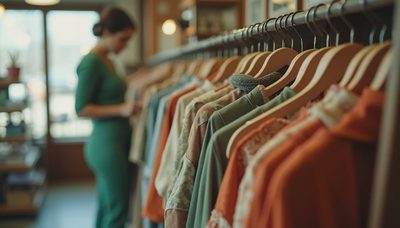
Blazers and suit jackets are the easiest entry point. Look for ones that fit well in the shoulders (that's the hardest alteration). If the sleeves are a bit long, roll the cuffs or have them hemmed. Pair with jeans, a simple top, and boots or sneakers. The contrast between structured and casual is the whole look.
For men's trousers, check the waist—you can always take them in or wear them loose with a belt. High-waisted, wide-leg men's trousers from the '70s are a favorite of mine. They look incredible with a fitted turtleneck and heels. And don't forget about men's knitwear. A chunky cable-knit crewneck in a neutral color is timeless.
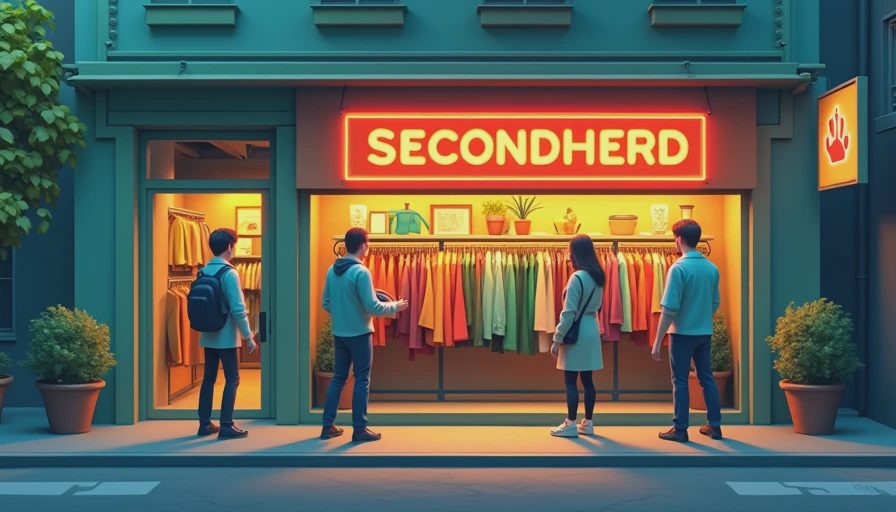
A Few of My Favorite Secondhand Male Fashion Finds
To give you a sense of what's possible, here are three pieces that have shaped my wardrobe. First, that gray wool blazer I mentioned earlier. It's unlined, which means it works for three seasons. I found it at the Salvation Army on Broadway in Bushwick for $18. I've worn it to job interviews, first dates, and Sunday brunch.
Second, a pair of men's corduroy trousers in a rich rust color. They were $12 at a flea market in Fort Greene. The waist is a 34, but I wear them high with a belt, and they have the perfect slight flare. They're my go-to for fall.
Third, a men's leather flight jacket from the '70s. I found it in a bin at a thrift store in Albany (my hometown). It was $25, and it still smelled of engine oil and cedar. I replaced the zipper for $20, and now it's my favorite jacket. Every time I wear it, I imagine the original owner—maybe a pilot, maybe a mechanic. That's the magic of secondhand male fashion: you're not just buying a garment; you're inheriting a story.
So next time you're at a thrift store, take a left instead of a right. Walk past the women's racks and into the men's section. Run your hands along the wool coats, flip through the ties, and try on a pair of trousers that are two sizes too big. You might find your next beloved piece. And when you do, wear your story.
——
Wear your story.