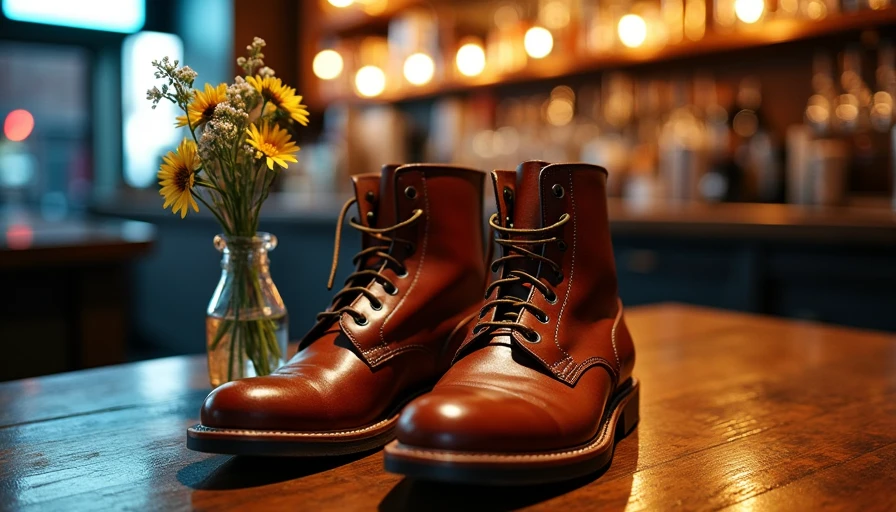

Boots That Survived the Catskills and Still Look Good at a Bar
I have a very specific problem, and I suspect some of you share it. I own exactly one pair of boots that I genuinely love, which means I wear them everywhere. To the farmers market on Saturday mornings. To the bodega at 11 PM when I realize I'm out of oat milk. To the trails in the Catskills that are definitely too muddy for leather boots but I wear them anyway because the alternative is a pair of hiking shoes that look like orthopedic moon boots and I simply refuse. To the bar afterward where I'm still wearing those same boots, now splattered with Hudson Valley mud, and someone inevitably says, "Hey, nice boots — where'd you get them?"
And I get to say: "Oh, these? These have stories."
This is not an exaggeration. These boots have summited Slide Mountain in October when the trail was covered in wet leaves and my friend Jenna kept saying "are you sure we're on the right path" and I kept saying "absolutely" while secretly consulting three different trail apps. They have crossed the Esopus Creek in April, which is not technically a creek-crossing season unless you enjoy water up to your ankles and the distinct sensation that you have made a terrible mistake. They have walked through the town of Phoenicia at dusk looking for a restaurant that turned out to have closed two years ago, which led to us eating gas station sandwiches on a bench and honestly that was one of the best meals of my life. They have survived a surprise November snowstorm near Hunter Mountain that the weather app definitely did not predict, and they have stood on the sticky floor of at least four Brooklyn bars within 24 hours of coming off a trail, still wearing the evidence of the day's adventures like a badge of honor.
This is an essay about boots. But it's also an essay about the philosophy of buying things that can go anywhere — and the quiet rebellion of refusing to own separate wardrobes for separate lives.
The Boots in Question
Let me describe them before I tell you any more stories, because you should know what we're dealing with here. They are Red Wing Heritage Clara boots. I bought them four years ago at a shop in Red Hook that smelled like leather and wood polish and the particular kind of masculinity that doesn't intimidate me. The man who sold them to me had worked there for thirty years and looked at my feet for approximately four seconds before bringing out the exact right size. I paid full price, which was $330, which was more money than I had ever spent on anything that wasn't rent or a flight to see my mother. I stood at the register with my credit card in my hand and had a full existential crisis while the salesman watched patiently. "Those boots will last you longer than any relationship," he said, and reader, he was not wrong.
They are made of amber-colored leather that has darkened over the years into something closer to chestnut. The stitching is visible but not showy. The soles are Vibram, which is a word I had never heard before I bought these boots and now say with the authority of someone who definitely knows what that means. They hit right above the ankle. They have a subtle cap toe. They weigh approximately three pounds each, which sounds like a complaint but is actually a feature — putting them on feels like strapping into something serious, like preparing for a journey even if the journey is just to the coffee shop.
When I first bought them, they were stiff and unforgiving and gave me blisters in places I didn't know could blister. The break-in period was brutal. I limped around my apartment for a week, wearing thick socks and questioning every decision that had led me to this point. Hemingway the cat watched me with what I interpreted as judgment. But then, somewhere around day eight, something magical happened: the leather started to yield. The boot started to learn the shape of my foot. We reached an understanding, this boot and I. We became partners.
Mountain One: Slide Mountain, October
The first real test came six months after I bought them. Jenna, my most outdoorsy friend and the only person who will agree to my "let's hike a mountain and then immediately find a bar" plans, had proposed a day trip to the Catskills. Slide Mountain. Highest peak in the range. Supposedly moderate difficulty. "It'll be fun," she said, which is what people always say before things that are only retrospectively fun.
I wore the boots. This was a gamble. They were still relatively new, still holding onto some of their original stiffness, and I was about to ask them to carry me up 4,180 feet of elevation gain over rocky terrain. But I had a theory I wanted to test: that a well-made boot could handle both the mountain and the inevitable post-hike stop at a brewery, without looking out of place at either. I was tired of the "athletic gear for outdoors, real clothes for indoors" binary. I wanted one pair of boots that could do everything.
The hike was hard. The trail was covered in what hikers call "leaf litter" and what I call "nature's banana peels" — a thick carpet of wet October leaves that made every step uncertain. There were sections where I had to scramble over exposed rock faces using both hands. There was a moment where Jenna and I took a wrong turn and added an extra mile to our journey, a mistake I blamed on her but was definitely my fault. There was a point near the summit where the wind picked up and the temperature dropped about fifteen degrees and my fingers went numb and I thought, "this is it, this is how I die, at least I'm wearing good boots."
But the boots performed. The Vibram soles gripped wet rock like they personally had something to prove. The leather kept my feet dry through mud puddles and a stream crossing that was not technically on the trail but seemed like a shortcut. By the time we reached the summit, my feet were tired but not blistered, and the boots had already started molding to my ankles in a way that felt almost custom.
The view from the top was the kind of view that makes you forget your legs hurt and your lungs are burning. Rounded peaks fading into blue-gray distance. Patches of orange and red where the fall foliage was still hanging on. Clouds moving fast overhead. Jenna and I sat on the rocky outcrop and ate sad sandwiches we'd packed eight hours earlier and didn't speak for ten minutes, which is the sign of either a good hike or a near-death experience.
On the way down, Jenna asked if I wanted to stop at a brewery in Kingston. "They have outdoor seating," she said. "And a fire pit." I looked at my boots, now coated in a fine layer of Catskill dirt, the leather slightly scuffed in a way that I would later describe as "character." They looked like hiking boots who had seen some things. But they also still looked like boots — real boots, leather boots, the kind of boots that wouldn't be out of place at a bar where people were drinking craft IPAs and wearing flannel shirts unironically.
We went to the brewery. I didn't change my boots. Someone complimented them.
The theory was holding.
The Creek Crossing Incident, April
Fast forward to spring. The Catskills in April are a different beast entirely. The snow is melting, the trails are basically streams pretending to be trails, and every hiker you meet has a slightly haunted look in their eyes. I had agreed to a "casual walk" along the Esopus Creek — not even a real hike, just a nature stroll, the kind of thing that's supposed to be relaxing — that turned into what I now refer to as The Creek Crossing Incident.
The trail was supposed to follow the creek, not cross it. That was the promise. But spring runoff had other plans, and about two miles in, we found ourselves facing a section where the trail simply... disappeared underwater. There was no bridge. There was no alternate route. There was only a rushing stream about knee-deep and the knowledge that turning back would mean retracing two miles of mud and regret.
"I think we can make it," said Jenna, who says this about everything.
The water was cold in a way that felt personal. Not just cold — hostile. Like the creek had a grudge against me specifically. I waded in, boots and all, because taking them off would have meant bare feet on rocks that had been underwater since approximately the Ice Age. The water came up to my shins and then my knees and I made a sound that I can only describe as a yelp. Behind me, Jenna was narrating the crossing like a nature documentary: "Here we see the urban millennial in her natural habitat, making questionable decisions about leather footwear."
Here's what happened to the boots: nothing. Absolutely nothing. The leather got wet, obviously, but it didn't soak through. The interior stayed dry. When I got to the other side and emptied about a cup of water out of each boot, the insoles were still only slightly damp. I had been wearing wool socks — a strategic choice — and my feet were cold but not frozen, wet but not waterlogged. The boots had formed a seal around my ankles that was apparently semi-aquatic.
We finished the walk. We found the restaurant in Phoenicia that had closed two years ago. We ate gas station sandwiches on a bench next to a man playing a harmonica, which felt appropriate for the day we'd had. And the boots? By the time we got back to the car, they were already starting to dry. By the next morning, after being stuffed with newspaper and left near a radiator, they looked like nothing had happened.
This is when I started to believe in the boots not just as footwear but as philosophy. There's a kind of object that deteriorates under pressure — that needs perfect conditions, that gets ruined by rain or mud or unexpected creek crossings. And then there's a kind of object that absorbs the pressure, takes the damage, and comes out looking better for it. These boots were the second kind. They were teaching me something about resilience that I hadn't learned from any self-help book.
The Surprise Snowstorm, November
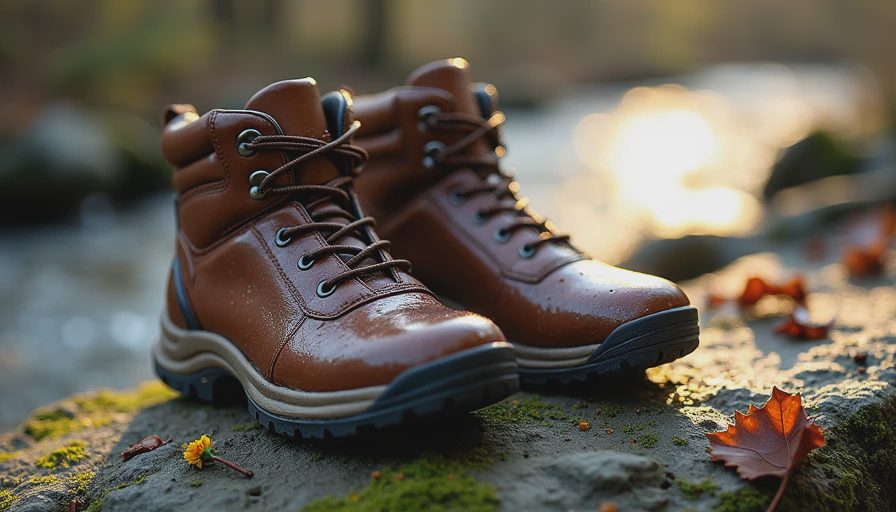
The third mountain was Hunter, and it was supposed to be an easy day. Late November, still technically fall, the forecast said "partly cloudy with a high of 45." We packed accordingly: light layers, snacks, nothing too serious. The boots went on because they were the boots, the only boots, the boots that went everywhere.
By the time we reached the fire tower at the summit, the temperature had dropped twenty degrees and the "partly cloudy" had turned into full-on snow. Not cute snow, not "look it's flurrying" snow, but the kind of snow that comes at you sideways and makes immediate eye contact and says "you should not be here."
The descent was challenging in ways that tested both my physical stamina and my emotional regulation. The rocks were slick with ice. Visibility was maybe fifty feet. My hands were so cold I couldn't feel my phone, which meant I couldn't check the trail map, which meant we were navigating by intuition and the occasional cairn. At one point, I sat down involuntarily on a patch of ice and slid about ten feet before the boots caught on a rock and stopped me. I sat there for a moment, looking at my feet, at the boots that had just saved me from a much longer and more painful slide, and I felt an emotion that I can only describe as genuine gratitude toward a pair of shoes.
When we finally reached the car, I was soaked, frozen, and possibly experiencing the early stages of hypothermia. But my feet were dry. My feet had been dry the entire time. The boots had withstood snow and ice and rock and one completely undignified butt-slide down a mountain, and they had kept my feet warm and protected through all of it. I took them off in the passenger seat and just stared at them for a minute, the way you might look at a friend who just showed up for you in a way you didn't expect. Jenna got back from the driver's side, handed me a thermos of coffee she'd had the foresight to bring, and said, "You're going to write an essay about those boots, aren't you."
She knows me too well.
The Bars of Brooklyn
Here's the thing about boots that have been through three mountains, a creek crossing, and a snowstorm: they look like it. The leather has a patina that no amount of conditioning can replicate artificially. There are scratches on the toe from rocks I kicked accidentally. There's a darker spot on the right heel where creek water left a subtle watermark. The soles are worn in a pattern that maps exactly to the way I walk — slightly heavier on the outside edge, a quirk a podiatrist once pointed out and I've been self-conscious about ever since.
These boots do not look new. They do not look pristine. They look like they have been places, which is exactly what I want my boots to look like.
And yet: I wear them to bars. Not hiking bars, not outdoor-themed breweries with trail maps on the walls, but actual bars in Brooklyn where people wear actual outfits and judge you silently for your footwear choices. I wear them with jeans and a sweater. I wear them with a dress and tights. I have worn them on dates, to birthday parties, to a reading at a bookstore where I was definitely underdressed but the boots made me feel like I had made a choice rather than a mistake.
No one has ever looked at these boots in a bar and said "are those hiking boots?" Instead, people say "nice boots" and "where did you get those" and "those look so good with that outfit." The scuffs and the watermarks and the worn soles don't read as damage. They read as story. They read as intentional. They read as a person who does things and goes places and doesn't keep separate wardrobes for separate versions of her life.
The Philosophy of the One Pair
This brings me to the actual point, because this essay is about boots but it's also not about boots at all. It's about the quiet violence of specialization — the way our culture tells us we need different things for different activities, different clothes for different selves, different identities for different contexts. Work clothes and weekend clothes. City shoes and hiking shoes. Inside clothes and outside clothes. The version of you that goes to meetings and the version of you that goes to mountains and the version of you that goes to bars, all wearing different outfits, living different lives.
I reject this. Not completely, not practically — I'm not going to wear a ball gown on a hike, though I would like to see someone try — but philosophically. I want things that can do more than one thing. I want boots that can hike and socialize, that can cross a creek and then show up at a bar, that can accumulate experience and wear that experience as decoration rather than defect. I want a wardrobe that's small and versatile and deeply, visibly lived-in. I want the objects in my life to be fewer and better and more interesting because of the places we've been together.
These boots cost $330, and I have worn them approximately 700 times over four years. That's about 47 cents per wear, and dropping every day. They have outlasted phones and apartments and one relationship and several friendships and a job I hated. They have been resoled once and will need it again soon, and I will pay for the resoling because these boots have earned it. They have earned my money and my loyalty and this entire essay, which is probably 3,000 words about footwear and I am not sorry about it at all.
A Guide to Buying Your Own Forever Boots
If you want boots like these — boots that can handle a mountain and a bar, a creek and a date, snow and everyday life — here's what to look for:
Full-grain leather. Not "genuine leather," which is a marketing term that means "we glued leather dust together and called it a day." Not suede, which is beautiful but will stain if you look at it wrong. Full-grain leather is the whole hide, the strongest part, the stuff that will mold to your foot and develop a patina and last long enough to justify the price.
Goodyear welt construction. This means the sole is stitched to the upper, not just glued. It means the boots can be resoled. It means you're buying something that can last a decade instead of a season. Look for visible stitching around the sole. If you don't see it, the boots are probably glued and will fall apart when the glue gives out, which will happen faster than you think.
A shape that's classic, not trendy. No excessive hardware, no weird colors, no platform soles, no logos visible from space. The ideal forever boot is slightly boring in photos — a shape that's been around for fifty years and will be around for fifty more. Boring in photos, extraordinary in person. That's the goal.
A break-in period you're willing to endure. The stiffer the leather, the longer the break-in, the better the eventual fit. Good boots hurt at first. That's not a bug, it's a feature. It means the leather is thick enough to eventually become a second skin. If a boot is comfortable the first time you put it on, it's probably not going to last.
A price that makes you uncomfortable. I'm not saying you need to spend 300+.Butyouprobablyneedtospendmorethan300+.Butyouprobablyneedtospendmorethan150. The math of quality footwear is counterintuitive: you spend more upfront to spend less over time. These boots cost 330buthaveoutlastedfivepairsof330buthaveoutlastedfivepairsof80 boots that I bought before them. The 80bootsareinalandfill.The80bootsareinalandfill.The330 boots are on my feet as I write this.
What These Boots Have Taught Me
The boots have taught me that good things get better with damage. They've taught me that waterproofing is not a myth but a practice, requiring regular application of wax products and a hairdryer and patience. They've taught me that people will judge you by your shoes but that judgment is often positive if your shoes look like they've been somewhere interesting. They've taught me that the border between "outdoor gear" and "real clothes" is artificial, a marketing invention designed to sell us more things. They've taught me that caring for an object — cleaning it, conditioning it, resoling it, protecting it — is a form of relationship, a small daily act of attention that pays off over years.
Mostly, they've taught me that you don't need a lot of things if the things you have are right. One pair of boots that can go anywhere. One jacket that works in three seasons. One bag that holds your laptop and your lunch and an extra sweater. A life that doesn't require changing costumes between activities, because all the activities are just different expressions of the same person.
I'm writing this on a Sunday evening. Tomorrow morning I'm taking these boots on another hike — nothing serious, just a loop in the Palisades that Jenna swears is "very chill." Then I'm meeting a friend for dinner at a restaurant in Williamsburg that I definitely can't afford but will go to anyway because she's in town and she wants to try the pasta. I will not change my boots between these two events. I will walk through dirt and leaves and probably some mud, and then I will walk into a restaurant with candles on the tables and a wine list longer than my resume, and no one will look at me twice. Because these boots have become, over four years and three mountains and countless bars, exactly what I needed them to be: footwear for a whole life, not a segmented one.
Also, they look really good with jeans.
Wear your story.