My Mother's Winter Coat, Twelve Years Later
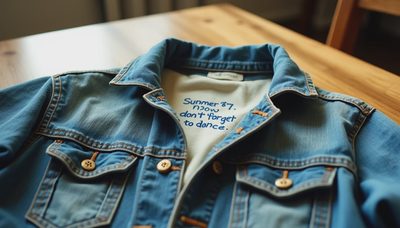
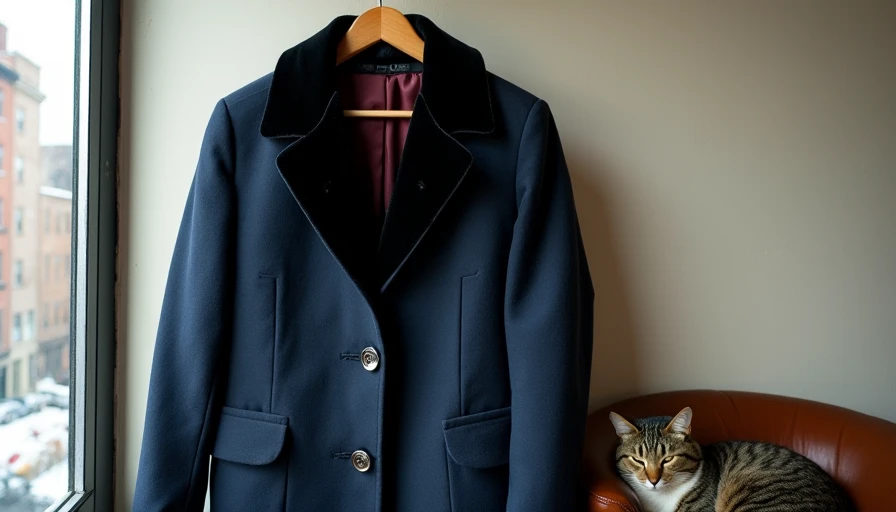
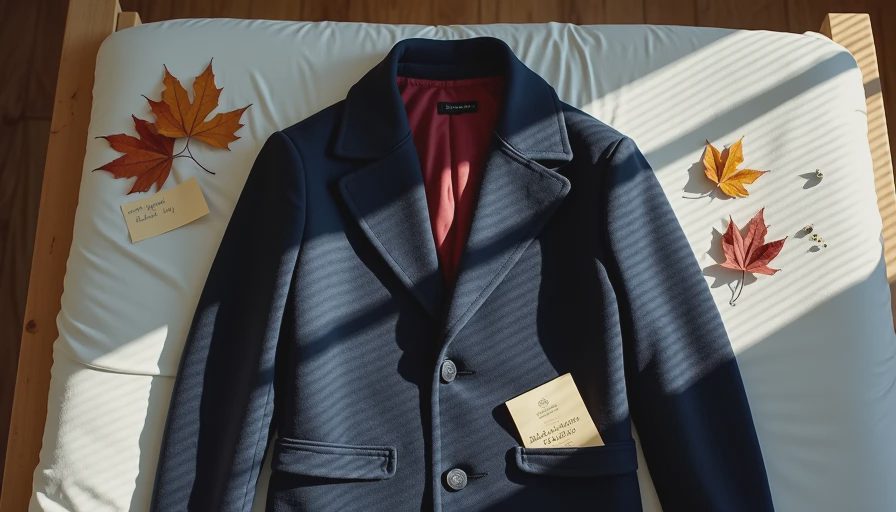
The coat is navy blue wool, single-breasted, with buttons made of dark horn that have been sewn back on so many times they no longer quite match. The lining is a burgundy satin that was once smooth and is now worn thin at the elbows — my mother's elbows, then mine. The collar is velvet, or was velvet, or is velvet in the way that things are velvet after twenty years of use: soft in some places, smooth in others, entirely gone in one small spot on the left side where her seatbelt rubbed against it during a thousand commutes. The pockets are deep enough to hold gloves and keys and receipts and, to my knowledge, at least one small rock that my younger brother gave her in 1998 and she carried until it wore a hole through the silk and disappeared somewhere between the dry cleaner and the front hall closet.
It hangs in my closet now, in Brooklyn, twelve years after she gave it to me, and sometimes I press my face into the collar and inhale, and she is there. Not the idea of her. Not the memory of her. Her. The specific combination of cold air and Estée Lauder perfume and wood smoke and whatever particular alchemy of skin and fabric that makes up a person you have known your entire life. The coat smells like my mother, and my mother is still alive, which makes this essay less a eulogy and more a meditation on the strangeness of wearing someone else's life on your body long after they've stopped wearing it on theirs.
The Coat in Its Original Life
Before it was my coat, it was my mother's coat. She bought it in 1992 at a department store in Albany called Macy's, which I know because she told me the story so many times I could recite it back to her. She was thirty-four years old. She had two young children and a job teaching English at a community college and a husband who worked too much and a mortgage that felt like a third child she had to keep alive. She did not have money for a good winter coat. But that year, her mother — my grandmother, a woman I barely remember, who died when I was seven and left behind only a set of teacups and a lingering sense of elegance — had given her two hundred dollars for Christmas with strict instructions: "Buy yourself something that will last. Not for the kids. Not for the house. For you."
My mother almost didn't do it. She told me about standing in the coat department at Macy's with the two hundred dollars in cash in her purse, picking up coats and putting them down, calculating how many groceries two hundred dollars could buy, how many piano lessons, how many electric bills. She tried on the navy coat three times before she bought it. The third time, a saleswoman walked by and said, "That coat was made for you," which is what saleswomen always say, but my mother chose to believe her. She handed over the cash. She wore the coat out of the store even though it wasn't cold enough to warrant it, because she wanted to feel what it was like to wear something that was exactly, completely hers.
For the next eighteen years, my mother wore that coat everywhere. It went to faculty meetings and parent-teacher conferences and my middle school choir concerts. It went to funerals for relatives I was too young to understand were gone. It went on weekend trips to the Adirondacks where my father would drive too fast on winding roads and my brother and I would fight in the backseat and my mother would sit in the passenger seat with her coat wrapped around her shoulders like a blanket and watch the trees go by without saying a word. It went to the hospital when my grandmother was dying, and it hung on a plastic chair in the waiting room for three days, absorbing the fluorescent light and the antiseptic smell and the particular silence of people waiting for news they don't want to hear.
My mother wore that coat until the velvet collar went bald in spots and the buttons had been replaced twice and the lining had been patched by a tailor who told her, gently, that it might be time for a new coat. She ignored him. She kept wearing it. She wore it until I was twenty-two years old and moving to New York City with a degree in English and no money and no winter coat of my own.
The Handover
The day I left for Brooklyn, my mother gave me the coat.
This was not a casual transaction. This was not "here, take this old thing, I never wear it anymore." This was a ceremony. My mother is not a ceremonious person — she is practical and unsentimental and has never cried at a movie in her life — but that day, standing in the driveway of our house outside Albany with my entire life packed into two suitcases and a bus ticket in my pocket, she held out the coat with both hands like it was a sacred object. Which I suppose, to her, it was.
"You need a winter coat," she said. "I don't need this anymore. I've had it a long time."
I knew this wasn't true. Albany winters are brutal. She absolutely needed a winter coat. But my mother has never been the kind of person who says "I love you" directly. She says it through casseroles and hand-me-downs, through the twenty dollars she slips into my pocket when she thinks I'm not looking, through the navy wool coat she has worn for eighteen years and is now giving to me because she knows I will freeze in the city without it.
I tried to refuse. She insisted. We stood in the driveway for a long minute, the coat suspended between us, and then she said the thing that I will never forget, the thing that comes back to me every time I put the coat on, the thing that I have turned over in my mind a thousand times and still can't quite unravel.
"Clothes are meant to be worn," she said. "I've had my turn. Now it's yours."
I put the coat on. It was too big in the shoulders and too loose in the waist — my mother is broader than I am, more substantial, a word she would hate but I mean as the highest compliment. It smelled like her, like perfume and cold weather and something I can only describe as home. I wore it onto the bus. I wore it when I stepped off in Port Authority, terrified and exhilarated and completely unprepared for the life I was about to start. I wore it through my first Brooklyn winter, which was the coldest winter of my life, not just because the temperature dropped to single digits but because I was lonely in a way I hadn't known it was possible to be lonely, surrounded by millions of people and none of them mine.
The coat kept me warm. That's the simplest thing I can say about it. For twelve years and counting, this coat has kept me warm.
The Coat in Its Second Life
In the first few years I wore it, the coat still felt like my mother's coat. I was borrowing it, playing dress-up in someone else's garment, a child in her mother's closet. I would catch my reflection in store windows and expect to see her face looking back at me. I would put my hands in the pockets and find things she had left behind — a crumpled tissue, a cough drop, a receipt from a grocery store in Albany dated 2008. Each discovery felt like a message, a small proof that she had been here, that the coat remembered her even if it was learning to accommodate me.
But over time, something shifted. The coat stopped smelling like my mother and started smelling like me. The sleeves stretched to fit my longer arms. The pockets began to accumulate my own debris: MetroCards, receipts from Brooklyn coffee shops, a single earring I'm still hoping will turn up, a fortune cookie fortune that says "You are about to embark on a delightful journey" and which I have kept for seven years because I am not above superstition. The coat learned my body the way it had once learned hers, the particular set of my shoulders, the way I hunch when I'm cold, the way I shove my hands deep into the pockets when I'm nervous.
I wore this coat to job interviews and first dates. I wore it to the subway platform at 6 AM when I was working a job I hated and had to be at a desk before sunrise. I wore it to the Brooklyn Flea on Sunday mornings, before this blog existed, before I knew that secondhand shopping would become the architecture of my life. I wore it to my first writing workshop, where I sat in a circle with twelve strangers and read a piece about my grandmother's teacups and cried in front of everyone because the writing had unlocked something I didn't know was there. I wore it home afterward, walking through the streets of Williamsburg at midnight, the coat wrapped tight around me, and I felt for the first time that I might be a real writer, that this strange new life I was building might actually hold together.
I wore this coat the day I quit my office job. I wore it the day I launched this blog. I wore it the day I adopted Hemingway from a shelter in Bushwick, carrying him in a cardboard carrier under one arm while the coat's collar turned up against the February wind. I wore it last year when I went home to Albany for Thanksgiving and my mother opened the door and looked at me standing on the porch in her coat and said nothing, just smiled in a way that contained eighteen years of winters and twelve years of missing me.
What the Coat Has Absorbed
Clothing is absorbent. This is true in the literal sense — wool holds onto scents, silk takes on the oils of skin, leather darkens where it's touched — but it's also true in a way that's harder to measure. Garments absorb the events they witness. They soak up the emotions of the person wearing them. They become, over time, a physical record of a life, an archive made of fabric and thread.
I don't know what this coat absorbed when it belonged to my mother. I wasn't there for most of it. But I can guess. The anxiety of young motherhood, the exhaustion of working two jobs, the quiet grief of losing her own mother, the thousand small joys and disappointments of a life lived in one place for a very long time. The coat held all of that, and then it came to me, and now it holds my own versions of the same things — my own anxieties about work and love and whether I'm doing any of this right, my own griefs, my own joys, the particular texture of a life built in the city she never quite understood but supported anyway.
Sometimes I wonder if the coat is heavy, metaphorically speaking. I wonder if all those layers of experience have accumulated in the wool, if the fabric is saturated with memory the way a sponge is saturated with water. But when I put it on, it doesn't feel heavy. It feels solid. It feels like armor. It feels like wearing a garment that has already survived so much means that it can survive whatever I'm about to walk into. My mother's coat is a testament to endurance, to the fact that a well-made thing, properly cared for, will outlast trends and decades and the lives we thought we were going to live.
On Inheriting Things You Don't Deserve
Here is the part of this essay where I confess that I don't feel worthy of this coat. Not because I don't appreciate it — I do, fiercely, in a way that surprises me sometimes. But because the coat represents a version of value that I am still learning to understand. My mother bought this coat with two hundred dollars that her mother gave her, money that was meant to be spent on something lasting, something permanent, something that said "I matter." And my mother took that instruction seriously. She bought the coat and she wore it for eighteen years and she cared for it and then she gave it to me, and now I am the steward of an object that represents three generations of women trying to tell each other "you are worth something good."
I think about this a lot: the economics of value, the way women are taught to put themselves last, the radical act of buying an expensive coat when you have children to feed and bills to pay. My grandmother giving my mother two hundred dollars and telling her to spend it on herself. My mother actually doing it. The coat lasting long enough to outlive my grandmother and see my mother through most of her adult life and then come to me. This is not just a coat. This is a lineage. This is an inheritance of the most practical kind.
I also think about how I will never be able to repay this gift, not really. My mother gave me her coat, and I can't give it back to her — she wouldn't take it, even if I tried. I can't give her a coat of equal value, because the value of this coat isn't in the wool or the lining or the horn buttons. It's in the eighteen years she wore it, the twelve years I've worn it, the accumulation of experience that has been pressed into every fiber. No new coat could match that. So instead I just keep wearing it, keep taking care of it, keep letting it absorb more life. Maybe that's what inheritance really means: not paying back, but paying forward. Taking what you've been given and adding your own years to it before you pass it on.
The Coat Today
The coat is thirty-four years old now. It's older than me. It's older than most of my furniture, most of my friendships, my entire career, my entire adult life. The velvet collar is almost entirely bald, the lining has been replaced twice, and there's a small moth hole near the left pocket that I keep meaning to patch and never do because it seems like the kind of imperfection that belongs there. The buttons are a chaos of mismatched horn — the originals are long gone, the first replacements came from a notions shop in Albany, and the most recent one was scavenged from a blazer I found at a thrift store in Queens. They don't match. They never will. But they hold the coat closed, and that's what matters.
I still wear it every winter. I will wear it until it falls apart, and then I will pay someone to put it back together, and then I will keep wearing it. This coat will outlast me, probably. It will outlast Brooklyn winters and Albany winters and whatever winters come after. It will hang in closets belonging to people who haven't been born yet, and someday one of them will press their face into the collar and try to identify the faint, layered scent of the women who wore it before. They will smell my perfume and my mother's perfume and the ghost of my grandmother's two hundred dollars, and they will understand, maybe, what it means to wear someone else's story on your shoulders.
In the meantime, the coat and I have more winters ahead. The Catskills are calling — Jenna sent me a text about a new trail near Phoenicia — and it's supposed to snow this weekend. I'll put on my mother's coat and my good boots and I'll walk through whatever weather comes, wrapped in thirty-four years of history, warm in a way that has nothing to do with wool.
Wear your story.