
I Found a Wedding Dress at a Garage Sale
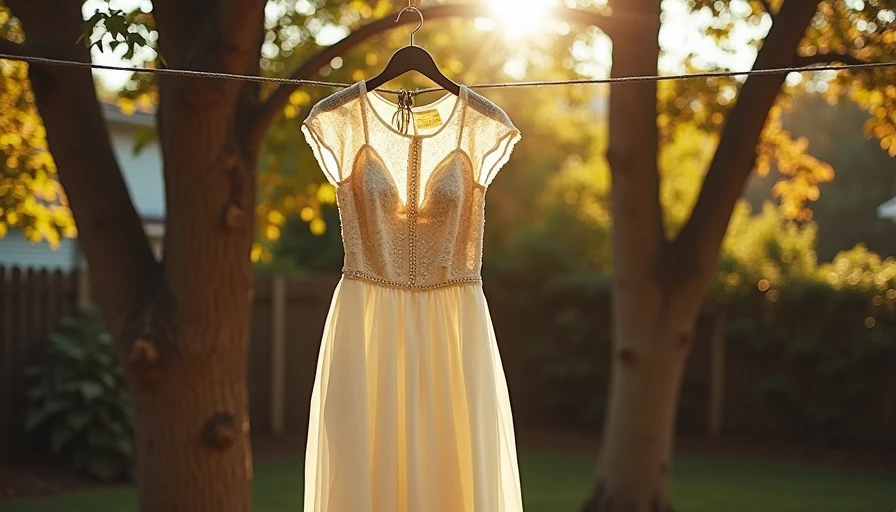
The dress was hanging from a sagging clothesline strung between two maple trees in some stranger's backyard in Poughkeepsie, and I almost didn't stop the car. I was supposed to be looking for a vintage desk lamp. That was the deal I made with myself that morning: one desk lamp, no detours, be home by two. But then I saw the lace catching the September light like it was trying to wave me down, and well — I have never been particularly good at keeping promises to myself when old fabric is involved.
It cost thirty dollars. Let me say that again so it really sinks in. Thirty dollars. The woman running the sale was emptying her late aunt's house and clearly had no patience for sentimentality. She had priced everything to disappear: a set of Pyrex bowls for five bucks, a working record player for twenty, boxes of Christmas ornaments for a dollar each. The wedding dress was an afterthought, strung up next to a collection of rusty garden tools. When I asked about it, she shrugged and said, "That old thing? My aunt wore it in, I don't know, the seventies? You want it, it's yours for thirty."
I wanted it. I wanted it the way you want to keep a stranger's diary from being thrown in the trash. It wasn't even about wearing it — the dress had long sleeves with delicate button closures at the wrists, a high lace collar that practically curtsied, and a train that had seen better decades. This wasn't a dress you'd wear to a modern wedding unless you were deliberately courting anachronism. But the craftsmanship. The tiny pearls sewn into the bodice, each one still attached after forty-plus years. The way the lace had yellowed just slightly at the edges, like the pages of a beloved paperback. This dress had stories in its seams, and I'm constitutionally incapable of walking away from stories.
So I handed over thirty dollars, carefully folded the dress into the trunk of my car, and drove home feeling like I had just adopted a very fragile, very sentimental ghost.
The Investigation Begins (Poorly)
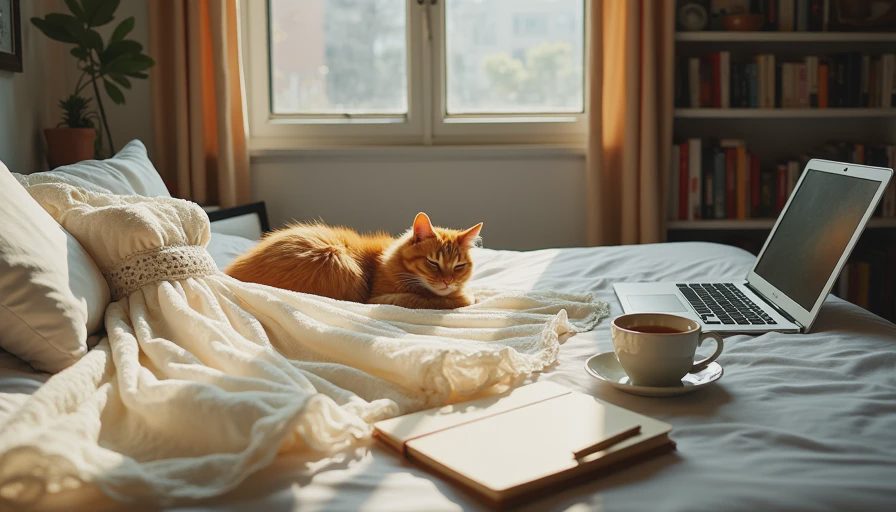
The first thing I did when I got back to my apartment was spread the dress across my bed and start hunting for clues like I was a detective in a BBC drama, which is to say I had absolutely no idea what I was doing but I was committed to the aesthetic. Hemingway the cat immediately claimed the train as his new favorite napping spot, which complicated matters.
What I knew: the dress belonged to a woman named Margaret, according to the niece who sold it to me. She had worn it in the 1970s, probably 1978 based on the style — I spent an embarrassing amount of time Googling "1970s wedding dress collar trends" at 11 PM that night, which is exactly the kind of Friday evening activity that keeps me perpetually single. She had lived in that house in Poughkeepsie for decades. And sometime recently, she had passed away, leaving behind a life's worth of belongings destined for the lawn.
What I didn't know: literally everything else. Who did Margaret marry? Was she happy? Did she keep the dress because she was sentimental, or because she just never got around to getting rid of it? Had anyone else ever worn it? Was the marriage a love story or a cautionary tale or something quiet and unremarkable in between?
I had a dress with no context, a name with no face, and a growing obsession that my friends politely described as "very on-brand for you, Chloe."
The Pocket Discovery
The breakthrough came three days later, and it came from the pockets — which is almost always where the good stuff hides. I was carefully steaming the dress (a process that took two hours because I was terrified of damaging forty-year-old lace) when my fingers brushed against something crinkly in the right-side pocket. Pockets in wedding dresses are already a miracle. Pockets in vintage wedding dresses that still contain things? That's the kind of discovery that makes me believe in some kind of benevolent universe.
Inside the pocket were three items that rewrote everything:
A folded cocktail napkin from the Holiday Inn in Newburgh, NY. On the back, in faded ballpoint pen, someone had written: "Mike — 10:30 — Don't be late this time." The handwriting was rushed, slanted forward like it was in a hurry to exist.
A small enamel pin shaped like a daisy. The clasp was broken, which is probably why it ended up in the pocket and stayed there for four decades. The petals were chipped, but you could still see the original yellow glaze.
A strip of photo booth pictures, four frames. Black and white. A man and a woman, probably mid-twenties, making increasingly ridiculous faces. Frame one: they smile normally. Frame two: she's laughing, he's looking at her like she just said something wildly inappropriate. Frame three: they're making the same exaggerated fish face. Frame four: she's kissing his cheek, and his eyes are closed.
The dress had a story after all. It had names and faces and inside jokes and a man named Mike who was apparently prone to lateness. It had a woman — Margaret, presumably — who kept a daisy pin in her wedding dress pocket and wrote notes on cocktail napkins and made fish faces in photo booths. She wasn't just "the aunt who owned the dress." She was someone. She was funny and impatient and maybe a little reckless, and she married a guy who looked at her like she was the most surprising person in every room.
I sat on my bedroom floor with the photo strip in my hand and cried a little bit. Not sad crying. The kind of crying you do when you realize you're touching evidence of a life that happened, fully and messily and beautifully, long before you existed.
The Reunion Attempt
Here is where the story takes a turn I did not expect, because I had fully planned for this essay to end with a poetic reflection on how some mysteries are meant to remain unsolved, how the dress was enough, how I would hang it in my closet and let its secrets stay secrets. That would have been a lovely, tidy ending.
Instead, I became temporarily unhinged and tried to find Margaret's family.
I drove back to the house in Poughkeepsie, which was not a house anymore — it had been sold, a "SOLD" sticker slapped across the real estate sign, the driveway empty. I knocked on the neighbor's door. An elderly man answered, and when I explained, poorly, that I had bought a wedding dress at the estate sale and found some personal items and was trying to return them to the right people, he looked at me like I was either very sweet or very strange, probably both.
"You're talking about Maggie," he said. "Maggie and Mike. They moved to Florida in the early 2000s. Mike passed about ten years back. Maggie just passed this spring. Their kids cleared out the house."
I asked if he knew how to reach the kids. He went inside, rummaged around, and came back with an email address scribbled on a gas station receipt. "That's their daughter, Sarah. Lives in California now. Don't tell her I gave you this."
The Email I Almost Didn't Send
I drafted and deleted that email fourteen times. What do you say? "Hello, I bought your mother's wedding dress at a garage sale and found some things in the pocket and I think you should have them back"? That sounds either like a scam or the beginning of a very emotional episode of a home renovation show. I eventually sent something deeply awkward that began with "I promise I'm not a weirdo, or at least not a dangerous weirdo" and explained the whole situation.
Sarah replied within four hours.
She told me her mom had always talked about that dress. About the daisy pin she wore on her honeymoon. About the photo booth at the Holiday Inn where they spent their wedding night because they couldn't afford anything fancier. About the napkin note she wrote Mike during the reception because he kept disappearing to talk to his old college friends and she wanted him to know she was ready to leave whenever he was. "Don't be late this time" — because apparently Mike was late to their first date, late to their engagement dinner, and Margaret had been gently roasting him about it for their entire relationship.
The dress, Sarah said, was her mother's most treasured object. She had kept it in a cedar chest for decades, taking it out every anniversary to show her kids. "She always said she wanted to be buried in it," Sarah wrote, "but by the time she passed, it didn't fit anymore, and we didn't know what else to do with it. We figured someone would find it at the sale. Someone who'd appreciate it. Mom would have liked that idea."
I mailed the photo strip and the daisy pin and the napkin to Sarah in California. She sent me a photo of her mother and father on their wedding day — Margaret radiant in that high-collared lace dress, Mike beaming beside her in an aggressively brown suit, both of them looking like they had absolutely no idea what they were doing but were thrilled to be doing it together.
What I Kept
The dress is still in my closet. Sarah told me to keep it. "Mom would have loved knowing a writer in Brooklyn has it," she said. "She always wanted to be a writer. Never got around to it."
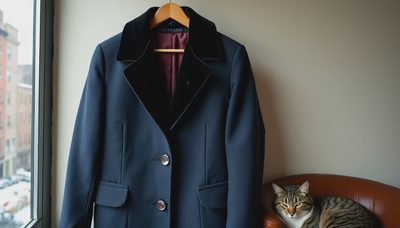
So now I have a stranger's wedding dress hanging next to my corduroy jacket and my mother's winter coat and all the other garments that have accumulated their own stories in my care. I don't know if I'll ever wear it. Maybe. Maybe to something wildly inappropriate, like grocery shopping or a first date, just to see what happens. Maybe I'll frame it and hang it on my wall, a textile story of a woman I never met who laughed hard in photo booths and loved a chronically late man named Mike for her entire life.
What I know now that I didn't know before: clothes are never just clothes. They're time machines made of thread. They're diaries we wear on our bodies. They're proof that someone existed, someone loved, someone showed up for their life in a high-collared lace dress and made fish faces at the camera and wrote impatient notes on cocktail napkins and kept a broken daisy pin for reasons even their children might never fully understand.
The dress was thirty dollars. The story was priceless. And somewhere in California, a woman named Sarah has a photo strip of her parents on their wedding night, back in her possession because a strange woman in Brooklyn couldn't stop herself from pulling over at a garage sale.
I still don't have a vintage desk lamp. Some things never change.
Wear your story.