
Thrift Shopping in the Bronx: A Guide Nobody Writes About
Let me tell you something embarrassing: I have lived in New York City for seven years, and until last month, I had never once gone thrift shopping in the Bronx. Not once. I've dragged myself to every overpriced "curated vintage" shop in Williamsburg where a stained 1995 concert tee costs ninety dollars. I've elbowed through the L Train Vintage crowds in Bushwick on a Saturday afternoon, fighting for my life over a pair of Levi's that still had someone else's gum in the pocket. I've even taken the train to deep Queens for an estate sale I found on Craigslist that turned out to be a guy selling his deceased neighbor's collection of porcelain clowns. (I bought two. I don't want to talk about it.)
But the Bronx? Somehow, in my mental map of secondhand shopping, the entire borough had been filed under "probably nothing there." Which is, I now realize with the clarity of someone who has seen the light and also a lot of affordable cashmere, absolutely deranged thinking.
The Bronx has 1.4 million people. It has neighborhoods that have been lived in, loved in, and dressed up in for generations. It has grandmothers who bought good wool coats in 1985 and took care of them. It has people who inherited furniture and china and jewelry and didn't know what to do with it all, so they donated it to the little thrift shop on the corner that nobody from Brooklyn ever bothers to visit. The Bronx is not a thrift desert. The Bronx is a thrift promised land, and I have been sleeping on it for seven years like an absolute fool.
This is my attempt at penance. Three Saturdays. Five thrift stores. One unlimited MetroCard. Eighty dollars cash. And a commitment to finally, finally giving this borough the secondhand shopping guide it deserves.
The Rules I Set for Myself
Before we get into the stores, let me establish the parameters of this very scientific investigation, because I am nothing if not a rigorous journalist when it comes to buying other people's old clothes.
Rule number one: No Manhattan. No Brooklyn. Bronx only. If the store address didn't have "Bronx, NY" at the end, I wasn't going. This was about discipline.
Rule number two: I had to buy at least one item at every store. No leaving empty-handed just because nothing immediately screamed at me. Part of thrift shopping is learning to see potential in things that don't present themselves perfectly on the hanger. This rule was, in retrospect, the one that nearly broke me — but also the one that taught me the most.
Rule number three: Total budget of eighty dollars for the entire experiment. That's sixteen dollars per store, which in Manhattan vintage terms would buy me approximately one sleeve of a denim jacket. In the Bronx? Spoiler alert: I bought twelve items and still had money left for a slice of pizza.
Rule number four: Document everything. The stores, the finds, the prices, the people. If I was going to write a guide, I needed receipts — literally and metaphorically.
Rule number five: Talk to at least one person at every location. A cashier, a fellow shopper, a person sorting donations in the back. Thrift stores are not just about the stuff. They're about the ecosystem of people who keep them running, and I wanted to understand why these stores mattered to the neighborhoods they served.
With these rules in my pocket and a reusable tote bag that had seen better days, I set out on Saturday number one.
Saturday One: The South Bronx Revelation
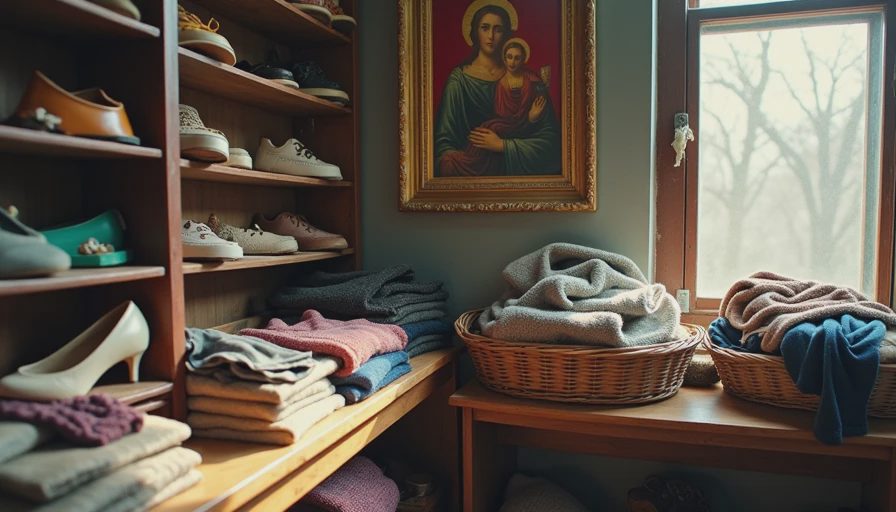
My first stop was a small thrift shop on 149th Street called Saint Margaret's Attic, a name that immediately charmed me because it implies a very specific kind of hoarding, the holy kind, the kind where angels are just storing their off-season wardrobe until the Second Coming. The shop is run by a tiny Catholic church and staffed entirely by volunteers, most of whom appeared to be over seventy and completely unbothered by my presence.
The space was maybe the size of my apartment's living room, which is to say not large, but it was organized with a level of precision that bordered on intimidating. Sweaters were folded and sorted by color. Blouses hung in size order. The shoe section — and I use the word "section" generously, it was a bookshelf — featured exactly eight pairs of shoes, all of them clean, all of them priced under six dollars.
Within ten minutes, I found:
A forest green cashmere cardigan, $4. Four dollars. In Manhattan, four dollars buys you a single avocado toast ingredient, not an entire sweater made from the softest fiber known to humankind. It had one tiny moth hole on the left sleeve, which I can fix in approximately four minutes with a needle and thread. The label said "Lord & Taylor," which was a department store I vaguely remembered my grandmother mentioning. This sweater had clearly belonged to an older woman who took immaculate care of her things and probably never imagined some millennial in a Brooklyn walk-up would eventually buy it for the price of a bodega sandwich.
A navy silk scarf with hand-rolled edges, $2. The pattern was a very specific shade of burgundy and cream that matched a blazer I already own. At this point, I started to feel like the universe was personally curating this thrift shop for me, which is a dangerous feeling to have in a secondhand store because it leads to the purchase of things you definitely do not need, like the porcelain clowns. I bought the clowns! I am not above this trap!
A 1970s ceramic soup tureen shaped like a cabbage, $5. Okay, I know this isn't a fashion item. But I need you to understand that this cabbage tureen was magnificent. Each leaf was individually sculpted. The lid had a tiny cabbage-stem handle. It was the kind of object that makes you believe in art again. When I brought it to the counter, the volunteer cashier — a woman named Doris who had been working at Saint Margaret's for twenty-three years — looked at it approvingly and said, "That's been here since February. I was starting to think nobody appreciated a good cabbage." We had a moment, Doris and I. A cabbage moment.
Total spent at Saint Margaret's Attic: 11.Remainingbudget:11.Remainingbudget:69.
I practically skipped to the subway. Three items, eleven dollars, and the blessing of a woman named Doris. The Bronx was already exceeding expectations.
Store Two: The Nostalgia Warehouse
My second stop that Saturday was Everything But The Kitchen Sink, a thrift store on Fordham Road whose name turned out to be literal — they literally sold everything except kitchen sinks, because someone had apparently already bought the one kitchen sink they had in stock. The store occupies what used to be a pharmacy, and the layout still follows the old pharmacy logic, with housewares where the prescriptions used to be and clothing racks where the greeting card aisle once stood.
This place was chaos, but it was the good kind of chaos. The kind of chaos where you have to dig, and digging is the entire point. I once read that the difference between shopping and treasure hunting is the presence of dirt, and Everything But The Kitchen Sink understood this philosophy deeply.
The clothing section was in the basement, which sounds ominous but was actually delightful in the way that only a well-loved basement full of other people's formalwear can be. The lighting was terrible, which is honestly a plus when you're evaluating secondhand clothes — if something looks good under fluorescent basement lights, it's going to look incredible anywhere else.
My finds:
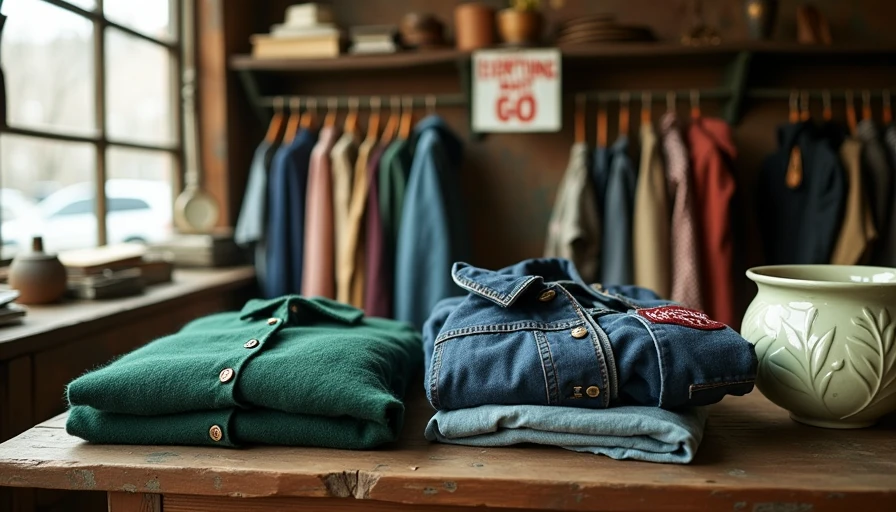
A 1990s oversized denim jacket, $8. Not just any denim jacket. This one had been personalized. The previous owner had embroidered tiny stars on the collar and sewn a patch reading "Camp Wakonda 1992" on the back. I don't know what Camp Wakonda is or was, but I now have strong feelings about it. The jacket fit perfectly, that slouchy oversized fit that people pay three hundred dollars for at Reformation. Eight dollars. I felt like I was committing a crime.
A black wool beret, $3. Because every outfit looks 40% more intentional when you add a beret. That's just science. This one had a small label inside reading "Made in France," which either means it's genuinely French or someone was very committed to a lie in the 1980s. Either way, three dollars.
**A pair of unworn leather loafers, 10.∗∗Thetagwasstillattached.Theoriginalpricewas10.∗∗Thetagwasstillattached.Theoriginalpricewas110. They were my exact size. At this point, I started genuinely wondering if I had died on the subway and gone to a very specific, very fashionable afterlife. I put them on immediately and wore them for the rest of the day, which is how I confirmed they were comfortable and also how I confirmed that finding unworn leather loafers for ten dollars makes you walk with an entirely new level of confidence.
Total spent at Everything But The Kitchen Sink: 21.Remainingbudget:21.Remainingbudget:48.
I was halfway through my budget and had purchased seven items. In Brooklyn, seven items would have cost me somewhere between "a utility bill" and "my entire rent." I called my friend Marisol from the sidewalk outside the store and yelled "THE BRONX HAS POCKETS OF JOY YOU DON'T EVEN UNDERSTAND" into the phone, which she later told me was concerning but also intriguing.
Interlude: The Woman in the Checkout Line
Before I move on to Saturday Two, I need to tell you about the woman I met in line at the Salvation Army on Webster Avenue, which was my third stop and honestly deserves its own section but I'm running out of Saturday. Her name was Gloria. She was probably in her sixties, wearing a purple tracksuit and carrying a basket full of picture frames. She noticed my armload of sweaters and asked if I was a reseller.
"No," I said. "Just a person who makes questionable financial decisions about other people's old clothes."
Gloria laughed. "Honey, that's the only kind of decision worth making."
We got to talking. Gloria had been thrift shopping in the Bronx for forty years. She told me about the stores that used to exist, the ones that closed, the ones that got replaced by chain drugstores. She told me about the vintage Halston dress she found in 1998 for seven dollars and still wears to every family wedding. She told me about her system for finding good jewelry: always check the glass case by the register, always look underneath the costume stuff, always be nice to the cashier because "they know when the good donations come in, and they'll hold things for you if you're not a jerk about it."
Before she left, Gloria gave me her phone number — not in a weird way, in a "call me when you're thrifting and I'll tell you where to go" way. I fully intend to take her up on this. Gloria, if you're reading this, I'm calling you next Saturday.
Total spent at Salvation Army: 14.Remainingbudget:14.Remainingbudget:34.
Saturday Two: The Outer Borough Pilgrimage
The following Saturday, I headed further north. My first stop was a store called Second Chances in the Norwood neighborhood, which had a sign out front reading "EVERYTHING MUST GO — AND WE MEAN EVERYTHING, SOME OF THIS STUFF HAS BEEN HERE SINCE THE BUSH ADMINISTRATION." I appreciated the honesty.
Second Chances is run by an organization that provides job training for formerly incarcerated women, which meant my money was going somewhere good while I indulged my shopping habit. Ethical thrifting! The best kind of enabling.
The store was larger than the previous ones, more warehouse than boutique, and it had a section that I can only describe as "housewares purgatory" — an entire aisle of ceramic figurines, mismatched teacups, and at least seventeen identical crock pots. I did not need a crock pot. I did, however, need:
A 1960s wool plaid skirt, $6. The kind of skirt that makes you want to go apple picking even if you have never gone apple picking in your life. The waist was a little snug, but thrift shopping rule number one is "never let a current size stop you from buying something you'll fit into eventually or get altered." This is also, coincidentally, the rule that explains why my closet is a museum of aspirational garments.
A hand-knit cream sweater, $5. Someone's grandmother made this. I know this because no machine creates this level of uneven stitching, this particular kind of love-made imperfection. It had a tiny note pinned to the sleeve: "Hand wash only. —E." E, wherever you are, I am taking care of your sweater.
Total spent at Second Chances: 11.Remainingbudget:11.Remainingbudget:23.
Saturday Three: The Final Haul
By the third Saturday, I had become feral with confidence. I walked into Treasure Chest Thrift on White Plains Road like I owned the place, which is to say I immediately went to the back corner where they keep the "we don't know what to do with this" rack and started digging.
Treasure Chest Thrift is the kind of store where nothing is organized by size, everything is color-coded in a way that makes no logical sense, and the dressing room is just a shower curtain hung across a storage closet. I loved it immediately.
Final finds:
A 1980s leather belt with a brass buckle shaped like a snake, $4. This is the kind of accessory that makes an outfit look intentional. Is it weird? Yes. Is it also the exact thing that will make my plain black dress look like I have a stylist? Also yes.
A silk camisole in a shade of blush pink that perfectly matches my skin tone, $3. Silk camisoles are one of those items that wealthy people pay hundreds of dollars for and the rest of us find at thrift stores for less than a cup of coffee. It had a tiny stain near the hem that came out with exactly four minutes of hand washing.
Total spent at Treasure Chest Thrift: 7.Remainingbudget:7.Remainingbudget:16.
The Verdict
Twelve items. Three Saturdays. Five stores. Seventy-three dollars spent — seven dollars under budget, which I used to buy the aforementioned pizza slice and a coffee at a diner where the waitress called me "sweetheart" and I almost cried about it.
Here is what I learned, beyond the obvious truth that the Bronx is a thrift paradise that more people should be paying attention to:
Thrift stores in outer boroughs aren't picked over. The resellers, the vintage dealers, the fashion students — they're all hitting the same five stores in Manhattan and Brooklyn. The Bronx stores still have the good stuff because nobody's making the trip.
Volunteers price things based on usefulness, not trendiness. Cashmere sweaters are 4becausetoDoristhevolunteer,asweaterisasweater.Thefactthatthisparticularsweaterwouldcost4becausetoDoristhevolunteer,asweaterisasweater.Thefactthatthisparticularsweaterwouldcost200 new is irrelevant. This is the anti-gentrification pricing model, and it is beautiful.
Older neighborhoods mean older donations. The Bronx has generational wealth of the non-financial kind — grandmothers passing down, or passing on, wardrobes accumulated over decades. That wool coat I bought? It's better made than anything in stores today. Quality has a long tail.
People want to talk about their stuff. Every cashier, every fellow shopper, every person sorting donations — they all had stories. The woman at Saint Margaret's who told me about the cabbage tureen. Gloria with her Halston dress and her forty years of tips. The man at Second Chances who showed me his collection of vintage watches and explained the history of each one. Thrift stores are community spaces as much as they are retail spaces. The chatting is part of the value.
How to Do This Yourself
If you want to replicate my three-Saturday experiment, here is my advice:
One: Bring cash. Not all of these stores take cards, and even the ones that do appreciate cash. Plus, a cash budget keeps you honest. When you can physically see the money leaving your wallet, you make better decisions.
Two: Wear a fitted tank top and leggings. Many of these stores don't have dressing rooms, or the dressing rooms are, as mentioned, a shower curtain situation. If you can try things on over your clothes in the aisle, you'll save yourself a lot of awkwardness.
Three: Go on Saturday mornings, but not too early. The stores restock during the week, and Saturday around 11 AM seems to be the sweet spot — new stuff is out, but the crowds aren't yet overwhelming.
Four: Talk to people. Ask the cashier what came in this week. Compliment another shopper's find. Thrift store regulars know things, and they will share those things if you're friendly.
Five: Bring a tote bag. Actually, bring two. You'll need them.
Six: Don't sleep on the Bronx. I did, for seven years, and I regret every single missed Saturday.
Wear your story.