
How to Build a Fall Wardrobe on a $200 Budget
I am about to make a statement that sounds like hyperbole but is actually the literal truth: every single item I wore last fall, from the coat on my back to the boots on my feet to the sweater I spilled pumpkin soup on during a particularly enthusiastic dinner conversation, cost me less than two hundred dollars total. Not per item. Total. The entire wardrobe. Two hundred dollars, a stack of ones and fives and the occasional twenty, spread across six weeks of strategic thrifting in the fall of 2025.
I did not do this because I had to. I did this because I wanted to see if I could. Because someone at a party once told me, with the absolute confidence of a person who has never questioned a single assumption in their life, that "you can't dress well on a budget anymore, thrift stores are picked over, everything good gets resold online." And I, a person who has built my entire closet and my entire career on the premise that this is not true, took that statement as a personal challenge.
I also did it because fall is the best season for thrift shopping, which is a fact I will defend with my life. Summer is for linen and cotton and the kind of lightweight fabrics that don't survive multiple owners. Winter is for heavy coats and wool sweaters, which are excellent but expensive even secondhand. But fall — fall is the Goldilocks season. Fall is when people clean out their closets and donate the things they didn't wear last year. Fall is when the temperature drops just enough to make layering fun but not enough to require a parka. Fall is when the colors go warm and rich and everything looks good together, burgundy and mustard and forest green and camel, a palette so forgiving you could get dressed in the dark and still look intentional.
So I set myself some rules, withdrew two hundred dollars in cash from the ATM on the corner of my block, and spent six weeks seeing how far I could stretch it. This is what I learned.
The Rules, Before We Begin
Every good experiment needs parameters, and this one was no exception. I established five rules at the outset, wrote them in my notebook, and taped them to my closet door as a reminder.
Rule one: Two hundred dollars, all in. Not a penny more. If I found something perfect for $210, I had to leave it behind. The budget was the budget, and the constraint was the whole point.
Rule two: Thrift stores, estate sales, and consignment shops only. No retail, no online resale platforms, no "but this is technically secondhand because someone returned it" loopholes. I wanted to prove that in-person thrifting, the kind anyone can do with a Saturday afternoon and a bus pass, was still viable.
Rule three: The wardrobe had to work as a complete system. Every piece had to coordinate with at least three other pieces. No orphan items, no "I'll find something to wear with this eventually." Everything had to earn its place immediately.
Rule four: All items had to be wearable as-is. No "this will be great once I hem it" or "I just need to replace the buttons." I am a person who mends and alters, but this experiment was about accessibility. Anyone should be able to replicate this, including people who don't own a sewing machine.
Rule five: The goal was twenty pieces. This was an arbitrary number I chose because it sounded substantial enough to be a real wardrobe and modest enough to be achievable. Twenty pieces — including outerwear, tops, bottoms, dresses, and accessories — for two hundred dollars. That's an average of ten dollars per item. Some would cost more, some less, but the math had to work out.
The Strategy Session
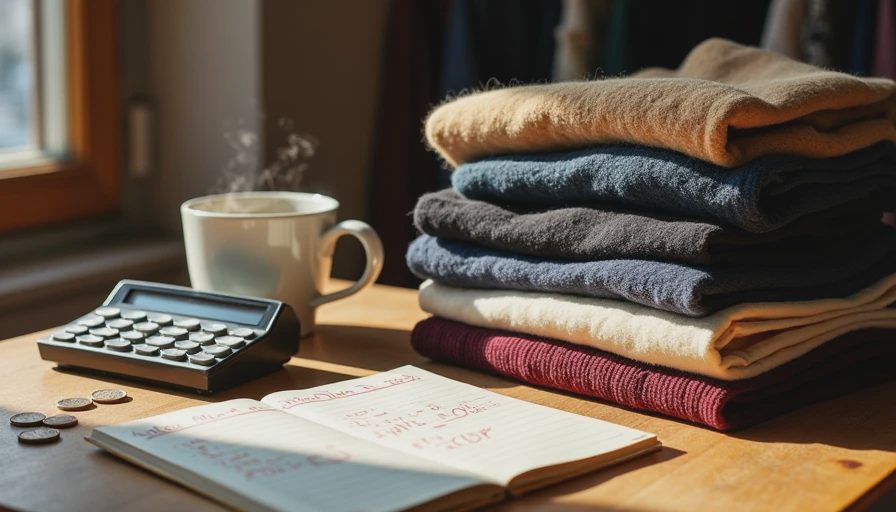
Before I set foot in a single thrift store, I spent an evening on my living room floor with a notebook, a pen, and Hemingway the cat walking across my pages at critical moments. I was building a strategy. Because thrift shopping on a budget is not about luck — or rather, it's not only about luck. It's about preparation, about knowing what you're looking for before you start looking, about resisting the siren song of the beautiful-but-impractical.
I listed the twenty items I wanted to find, organized by category:
Outerwear: One wool coat or heavy jacket, one lightweight jacket or blazer
Tops: Two long-sleeve shirts, two sweaters, two turtlenecks or mock-necks, one cardigan
Bottoms: Two pairs of pants or jeans, one skirt
Dresses: Two dresses that could be layered for fall
Shoes: One pair of boots, one pair of everyday flats or loafers
Accessories: One scarf, one belt, one bag
Wildcards: Two additional pieces, whatever I found that I loved
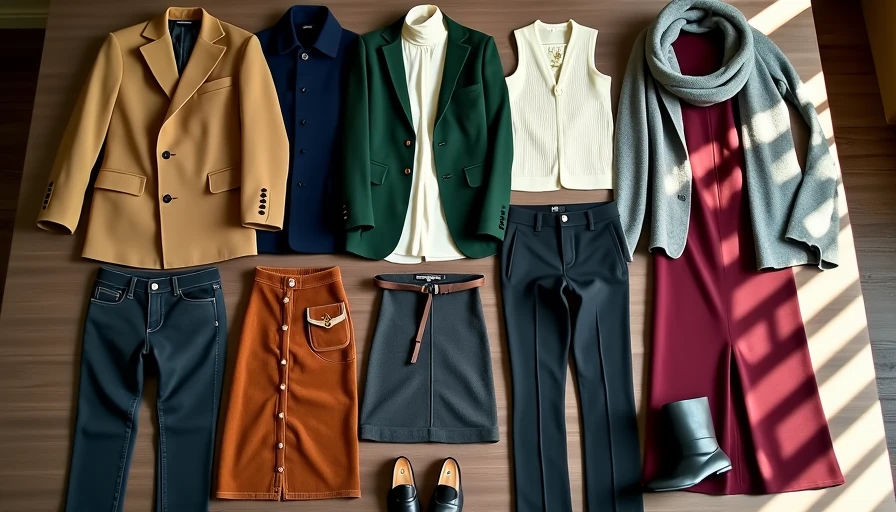
Then I made a color palette. This is the single most important thing you can do before thrift shopping, and I cannot emphasize it enough. When you're shopping secondhand, you cannot count on finding specific items in specific colors. But if you have a palette, a range of colors that all work together, everything you find will match everything else you find. My fall palette was: camel, cream, burgundy, forest green, navy, and charcoal. Six colors, endless combinations.
Finally, I made a map. I listed every thrift store within a two-hour radius of Brooklyn that I had either visited and loved or heard about and wanted to try. I organized them geographically so I could hit multiple stores in a single trip. I checked their hours and their sale days and their Instagram accounts, if they had them. Preparation, preparation, preparation. The shopping hadn't even started, and I was already having fun.
Week One: The Outerwear Jackpot
I started my search on the first Saturday of September, which was either brilliant or foolish depending on how you feel about thrift shopping during back-to-school season. The stores were crowded, yes, but they were also freshly stocked, because late August and early September is when people do their closet clean-outs. New donations hit the floor. The good stuff hadn't been picked over yet.
My first stop was a Housing Works in Park Slope, where I found the item that would become the anchor of my entire fall wardrobe: a camel-colored wool coat, single-breasted, with a notched collar and deep pockets. It was from the 1980s, based on the label, and it was in nearly perfect condition — no moth holes, no worn elbows, just a slight softening of the wool at the cuffs that suggested it had been loved but not worn out. The price was thirty-five dollars.
Thirty-five dollars for a wool coat that would cost four hundred new. I stood in the aisle with the coat draped over my arm and did the math in my head. Two hundred minus thirty-five left one hundred sixty-five for nineteen items. It was a big chunk of my budget, but outerwear is the first thing people see, the frame for every outfit. This coat was worth it. I bought it.
At the same store, I found a navy merino wool turtleneck for eight dollars. One small moth hole near the hem, easily ignorable, not visible when tucked in. Eight dollars. I was already at forty-three dollars total, with two items down and eighteen to go. I was slightly over my ten-dollar-per-item average, but the coat was worth the splurge, and I knew cheaper items were coming. I had faith. I had a map and a palette and two hundred dollars in cash, and I was unstoppable.
By the end of week one, I had visited four stores and acquired:
Camel wool coat: $35
Navy merino turtleneck: $8
Forest green cotton cardigan: $6
Cream silk blouse (label missing, but clearly old): $5
Pair of charcoal wool trousers: $7
Week one total: 61.Remainingbudget:61.Remainingbudget:139. Items found: 5 of 20.
The cream silk blouse deserves a special mention because it was the kind of find that makes me believe in thrift store magic. It was tucked between a rack of polyester fast-fashion tops, practically invisible, the silk so fine it felt like wearing air. Five dollars. Five dollars for a blouse that would have been two hundred new. The cashier at the register held it up and said, "This is gorgeous, great eye," which is the thrift store equivalent of a Michelin star.
Week Two: The Denim Dig
Week two was all about bottoms, which are famously the hardest thing to thrift. Pants have to fit. Dresses and tops and jackets can be slightly off — oversized, belted, layered — but pants are unforgiving. Pants demand precision. Pants have waistbands and inseams and the particular cruelty of sizing that varies wildly across brands and decades.
I spent an entire Saturday morning at the L Train Vintage in Bushwick, a store I have written about before, a store that requires patience and upper body strength because the racks are packed so tightly you have to physically wrestle them apart. I tried on fourteen pairs of jeans. Fourteen. I know this because I counted, marking tally marks in my notebook, each one a small exercise in hope followed by disappointment. Too tight in the waist. Too loose in the thighs. Too short in the leg. A wash that looked great on the hanger and terrible on my body. A pair of mom jeans from the 1990s that fit perfectly everywhere but gave me a silhouette I can only describe as "sentient rectangle."
The fifteenth pair was the one. Dark wash, high waist, straight leg, no visible branding, made in the USA, seven dollars. They fit like they had been tailored for me by someone who loved me. The tag inside was faded but I could make out the words "Union Made" and a date that looked like 1987. These jeans were older than half the people in the store. They were also perfect. I put them on and did not take them off for the rest of the day.
At the same store, in a bin marked "ALL ITEMS $2," I found a burgundy corduroy skirt with an A-line silhouette and pockets. Pockets! In a skirt! Two dollars! I pulled it out of the bin like I was pulling Excalibur from the stone.
By the end of week two, I had added:
Dark wash vintage jeans: $7
Burgundy corduroy skirt: $2
Black straight-leg trousers: $6
Forest green mock-neck sweater: $5
Leather belt with brass buckle: $4
Week two total: 24.Remainingbudget:24.Remainingbudget:115. Items found: 10 of 20.
At the halfway point, I was ahead of budget — one hundred fifteen dollars left for ten remaining items, an average of eleven fifty per piece. I was also starting to see how the wardrobe was coming together. The camel coat over the burgundy skirt. The navy turtleneck tucked into the dark jeans. The cream silk blouse with the charcoal trousers. Every combination worked, because I had stuck to my palette, because I had refused to buy anything that didn't coordinate with at least three other pieces.
Week Three: The Dress Quest
Week three was dedicated to dresses, which I had put off because dresses are harder to layer for fall and because I wanted to wait until I had a clear sense of the rest of my wardrobe before committing to two of them.
I found the first dress at an estate sale in Ditmas Park, in a house that belonged to a woman who had clearly been a very stylish person in the 1970s. The dress was a wrap dress — my beloved wrap dress, the silhouette I have evangelized about in other essays — in a shade of burgundy that matched my corduroy skirt almost exactly. It was silk. It was priced at ten dollars. I negotiated it down to eight because there was a small stain near the hem that I knew I could remove with cold water and patience. The woman running the sale, the deceased owner's daughter, said, "She wore that to my college graduation. It'll be nice to see it go to someone who appreciates it." I promised her I would appreciate it. I do. I am wearing it as I type this sentence.
The second dress came from a Goodwill in Cobble Hill: a sweater dress in heathered charcoal, long-sleeved, midi-length, the kind of dress that is essentially a socially acceptable blanket. It was twelve dollars, which felt slightly steep for Goodwill but was still, objectively, a very good deal for a wool-blend dress that would have cost eighty or a hundred dollars retail.
Week three additions:
Burgundy silk wrap dress: $8
Charcoal sweater dress: $12
Cream cable-knit sweater: $6
Navy wool blazer: $9
Week three total: 35.Remainingbudget:35.Remainingbudget:80. Items found: 14 of 20.
The navy blazer was a last-minute find, tucked in the men's section of a Salvation Army on Atlantic Avenue. It was from Brooks Brothers, according to the label inside, and it had been tailored at some point to fit someone with shoulders approximately my width. It was slightly too big everywhere else, but that's the current silhouette anyway — oversized blazers, the kind of look that fashion magazines call "borrowed from the boys" and I call "I found this in the men's section and it was nine dollars." Nine dollars for a Brooks Brothers blazer. I felt like I was committing a crime.
Week Four: Shoes and Accessories
Shoes are the hardest thrift category, period. End of discussion. Shoes are worn hard, worn out, worn down. They show their age in ways that clothing can hide. Finding good shoes at thrift stores requires luck and persistence and a willingness to walk away empty-handed from nine out of ten pairs.
I found my boots at a Housing Works in Chelsea on a Tuesday afternoon, which is a time slot I recommend for anyone who can manage it — the weekend crowds are gone, the new donations from the weekend have been processed, and you have the store almost to yourself. They were leather ankle boots, black, with a stacked heel that was high enough to be dressy but low enough to walk in. The brand was a French company I'd never heard of. The price was twenty-two dollars.
Twenty-two dollars was a significant chunk of my remaining eighty, but boots are essential for fall, and these were the only pair I'd found in four weeks of looking that fit me, that were in good condition, that matched my palette, that were comfortable enough to wear all day. I bought them. I wore them out of the store.
The flats were easier. A pair of burgundy leather loafers, barely worn, soles unscuffed, eight dollars at a thrift shop in Bed-Stuy. The label inside said "Made in Italy," which either meant they were genuine Italian leather or someone had gone to great lengths to lie about it. Either way, they were comfortable and the color matched my burgundy pieces perfectly, so I paid my eight dollars and moved on.
Accessories came together quickly in the final days. A cream wool scarf, five dollars at the Brooklyn Flea, thick and soft and long enough to wrap twice. A leather crossbody bag in cognac leather, nine dollars at an estate sale in Crown Heights, with a strap that was slightly worn but still sturdy. The bag had a small monogram stamped into the interior — "M.E.W." — and I wondered about the person who had carried it before me, what they kept in the pockets, where they took it. Then I paid nine dollars and it became mine.
Week four additions:
Black leather ankle boots: $22
Burgundy leather loafers: $8
Cream wool scarf: $5
Cognac leather crossbody bag: $9
Two wildcard pieces — rust-colored knit vest and ivory silk camisole: $14 total
Week four total: 58.Remainingbudget:58.Remainingbudget:22. Items found: 19 of 20.
The Final Item
With twenty-two dollars left and one item to go, I allowed myself a victory lap. I had nineteen pieces. I had a wardrobe that worked as a system, that mixed and matched into approximately sixty different combinations, that could take me from a coffee shop writing session to a dinner date to a weekend hike without requiring anything else. I had done it — almost.
The twentieth item found me, which is how thrift shopping works at its best. You don't find the things; the things find you. I was at an estate sale in Kensington on a rainy Sunday morning, not really looking anymore, just browsing out of habit. And there, on a table of scarves and gloves and the kind of small accessories that accumulate in dresser drawers over decades, I found a silk pocket square in forest green with a hand-rolled edge and a tiny embroidered stag in one corner. It was five dollars.
A pocket square had not been on my list. I had not planned for a pocket square. But the forest green matched my palette perfectly, and the stag was whimsical without being twee, and I had twenty-two dollars left and this cost five. So I bought it. I tucked it into the pocket of my nine-dollar navy blazer and walked out of the estate sale feeling like the most put-together person in all of Brooklyn.
Final item: Forest green silk pocket square with embroidered stag: $5.
Grand total spent: 195.Itemsfound:20of20.Remainingbudget:195.Itemsfound:20of20.Remainingbudget:5.
The Complete Wardrobe Inventory
Here, in its entirety, is what $195 bought me in the fall of 2025:
Category | Item | Price |
|---|---|---|
Outerwear | Camel wool coat, 1980s | $35 |
Outerwear | Navy wool blazer, Brooks Brothers | $9 |
Tops | Navy merino wool turtleneck | $8 |
Tops | Cream silk blouse, vintage | $5 |
Tops | Forest green mock-neck sweater | $5 |
Tops | Cream cable-knit sweater | $6 |
Tops | Ivory silk camisole | $7 |
Tops | Rust-colored knit vest | $7 |
Bottoms | Dark wash vintage jeans, 1987 | $7 |
Bottoms | Charcoal wool trousers | $7 |
Bottoms | Black straight-leg trousers | $6 |
Bottoms | Burgundy corduroy skirt | $2 |
Dresses | Burgundy silk wrap dress, 1970s | $8 |
Dresses | Charcoal sweater dress | $12 |
Cardigan | Forest green cotton cardigan | $6 |
Shoes | Black leather ankle boots | $22 |
Shoes | Burgundy leather loafers | $8 |
Accessories | Cream wool scarf | $5 |
Accessories | Cognac leather crossbody bag | $9 |
Accessories | Leather belt with brass buckle | $4 |
Wildcard | Forest green silk pocket square | $5 |
TOTAL | 20 items | $195 |
I kept the remaining five dollars. I taped it to the page of my notebook where I'd recorded all my purchases, a small souvenir of a successful experiment. Maybe I'll frame it someday. Maybe I'll spend it on something equally good.
What This Experiment Proved
The obvious lesson is that you can, in fact, build an entire season's wardrobe on a budget that most people would consider impossibly small. Two hundred dollars. Twenty pieces. Ten dollars per item, on average, with the most expensive item being thirty-five dollars and the least expensive being two dollars. This is not theoretical. This is a list of actual items, with actual prices, purchased at actual stores that anyone can visit.
But the less obvious lesson, the one that has stayed with me long after the experiment ended, is about constraint as creativity. When you have unlimited options, you make safe choices. When your options are limited — by budget, by availability, by the randomness of what happens to be on the thrift store rack that day — you are forced to be more creative. You pair things you wouldn't have paired otherwise. You discover combinations that surprise you. You develop a personal style that is genuinely personal, shaped by what you found rather than what a retailer decided to sell you.
The burgundy corduroy skirt was two dollars, and it became one of my most-worn items, the thing I reached for when I wanted to feel like I'd made an effort. The cream silk blouse was five dollars, and I wore it to a job interview and got the job. The camel coat was thirty-five dollars, and strangers stopped me on the street to ask where it was from, and I got to say "Housing Works, Park Slope, best thirty-five dollars I ever spent."
This is not about deprivation. This is not about denying yourself nice things. This is about redefining what "nice" means. It means a silk blouse for the price of a latte and a pastry. It means French leather boots for twenty-two dollars. It means a camel wool coat that makes you feel like you're in a Nora Ephron movie, for less than the cost of a dinner out. It means a wardrobe that tells a story, that reflects the time and effort and attention you put into building it, that is genuinely, completely yours.
How to Do This Yourself
If you want to replicate this experiment — and I think you should, I think everyone should try it at least once — here are my practical recommendations:
Start with a palette. Pick four to six colors that work together and look good on you. My fall palette worked because earth tones are naturally harmonious, but you could do all neutrals, or jewel tones, or pastels, or whatever makes your heart sing. Write the colors down. Bring the list with you. Do not buy anything that isn't on it.
Plan your categories before you shop. Know what you need — not specifically, not "a camel coat from the 1980s with a notched collar," but broadly: two sweaters, one coat, two pairs of pants. This keeps you focused. This keeps you from coming home with five scarves and no shoes.
Shop on weekdays if possible, Saturday mornings if not. Weekday afternoons are the quietest, best-stocked times to thrift. If you can only shop on weekends, go early — stores restock on weekdays, and the best stuff gets picked over by Saturday afternoon.
Check the men's section. Especially for blazers, sweaters, and outerwear. The best blazer I found during this experiment came from the men's rack.
Look for natural fibers. Wool, silk, cotton, linen, cashmere. These materials last longer, wear better, and look more expensive than synthetics, even when they're decades old. Learn to identify them by touch. It's a skill that pays for itself.
Don't be afraid of small flaws. A moth hole can be mended. A stain can be removed or hidden. A missing button is a two-minute fix. If something is otherwise perfect and costs five dollars, take the chance.
Keep cash in your wallet. When you have a physical limit, you make better decisions. You also avoid the "I'll just put it on my card and deal with it later" trap that leads to overspending.
Be patient. The experiment took six weeks. Not every trip was successful. I left stores empty-handed. I tried on fourteen pairs of jeans before finding the one. Patience is the skill that underpins all other thrifting skills.
Enjoy it. Thrift shopping should be fun. It should feel like treasure hunting. If you're stressed about finding everything on your list in one weekend, you're doing it wrong. Give yourself time. Let the wardrobe come together gradually. The process is part of the result.
This fall, I'll be wearing the camel coat again. I'll be wearing the burgundy silk dress and the forest green cardigan and the black leather boots. I'll probably add a few new pieces — thrift store finds, always — but the core of my wardrobe is the same core I built during this experiment, because good clothes last, and good style doesn't expire, and a two-hundred-dollar wardrobe worn for multiple seasons is a better investment than a two-thousand-dollar wardrobe worn for one.
Wear your story.