I’ll never forget the first time I stumbled into the world of **online secondhand fashion stores**. It was a rainy Saturday in my Williamsburg walk-up, and I was supposed to be writing. Instead, I fell down a rabbit hole of Depop listings and ended up buying a 1990s wool blazer from a seller in Portland. That blazer, which arrived smelling faintly of cedar and cost me $18, became the centerpiece of my fall wardrobe. It also sparked an obsession that’s reshaped how I think about clothes, money, and the stories we wear.
Before that day, I was a devoted thrift-store wanderer—the kind of person who spends Sunday afternoons digging through bins at Housing Works or taking the L train to a Salvation Army in Bushwick. But **online secondhand fashion stores** opened up something new: the ability to hunt for treasure from my couch, to search for specific brands or eras, and to connect with sellers who love clothes as much as I do.
Why the Digital Thrift Draws Me In
There’s a magic to scrolling through listings on Poshmark or Vinted. Unlike the overwhelming racks of a physical store, online platforms let me curate my search. I can filter by size, color, material, even decade. When I found a silk skirt from the 1970s on Vestiaire Collective, I knew exactly what I was getting—the seller had photographed every seam and described the minor pilling. That transparency feels honest, like a handwritten note from a friend who wants you to love the piece as much as she did.
I also love the serendipity. One night, I was searching for a simple white button-down and ended up buying a hand-knit cardigan from a woman in Maine who included a note about the yarn she’d used. That cardigan now lives in my closet with a label that says “found 2023, online secondhand.”

My Go-To Platforms for Secondhand Treasures
Over the years, I’ve tested nearly every major secondhand app. Here’s the short version of my experience:
- **Depop:** Perfect for Gen Z and vintage lovers. I’ve found the most unusual pieces here—a 1980s leather backpack, a silk scarf from a Paris flea market. Prices are low, but you have to dig.
- **Poshmark:** Great for mid-range brands like Madewell and Anthropologie. I once scored a pair of practically new Everlane jeans for $25. The social aspect (following sellers, making offers) feels like a community.
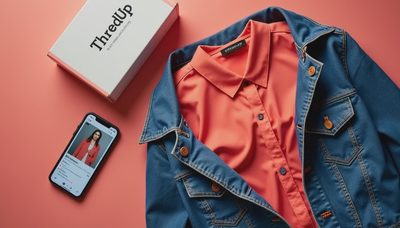
- **ThredUp:** For when I need basics without the hunt. Their “Good to Go” outfit bags saved me last winter when I needed a stack of turtlenecks. Quality is consistent.
- **Vestiaire Collective:** Higher-end, but the authentication gives peace of mind. I bought a vintage Coach bag here that I’ve carried nearly every day for two years.
- **eBay (yes, still):** Don’t sleep on it. Search for “vintage” plus your favorite brand. I found a 1990s Patagonia fleece for $40, and it’s my favorite hiking layer.
Each platform has its own rhythm, but they share one thing: the thrill of finding something with a past.
Three Rules I Follow for Smart Online Thrifting
After hundreds of purchases, I’ve learned a few tricks to avoid regret:
- **Know your measurements.** Sizes have changed over decades. I keep a measuring tape by my desk and compare bust, waist, and hip measurements to the listing.
- **Read the description—all of it.** Look for words like “pilling,” “stain,” “altered.” If there’s a flaw, it’s usually there. Honest sellers are the best sellers.
- **Check the return policy.** Many secondhand sites don’t offer free returns. I only buy from sellers with clear photos and good ratings. If it’s under $20 and I’m unsure, I take the risk—but rarely.
These rules have saved me from a few disasters. A too-small 1950s dress I bought on a whim taught me rule #1 the hard way.
A Dress That Found Me
Let me tell you about my favorite find. Last summer, I was scrolling Depop at 2 a.m. (as you do) and saw a listing for a cotton sundress with tiny blue flowers. The seller said she’d found it at an estate sale in Ohio, and the tag inside read “1968.” She was asking $15. I bought it without checking measurements—a rule I broke—but it fit perfectly. I wore it that weekend to a rooftop party, and three separate people asked where I got it. “I found it online,” I said, and they didn’t need to know the rest. But I know: that dress had a life before me. It might have been worn to a summer picnic or a graduation. Now it’s part of my story.
The Quiet Joy of Secondhand
Shopping **online secondhand fashion stores** isn’t just about saving money, though I have saved hundreds. It’s about slowing down. When I buy something used, I have to wait for shipping, inspect the listing, decide if I really want it. That pause stops impulse purchases. And when the package arrives, I feel a connection to the person who wore the piece before—and to the stranger who sold it to me. It makes my wardrobe feel like a conversation, not a consumer transaction.
There’s also something deeply satisfying about stumbling on a piece that feels like it was made for me, years before I was born. That is the quiet magic of secondhand.
Start Your Own Digital Treasure Hunt
If you’ve never tried **online secondhand fashion stores**, I’d recommend starting small. Pick one app—maybe Depop or Poshmark—and spend a few minutes searching for something you love. A color, a fabric, a decade. Don’t go in looking for something specific; let the algorithm surprise you. You might find a cashmere sweater for $10 or a leather jacket that needs a little love. Either way, you’ll get a story.
Wear your story.